
Egypt, Tunisia, Libya, Algeria or Morocco. Which one of these places has the best desert experience?
I just finished traveling to all northern African countries and the question comes up more often than I though. Which one is the best place of all of them to see the desert?
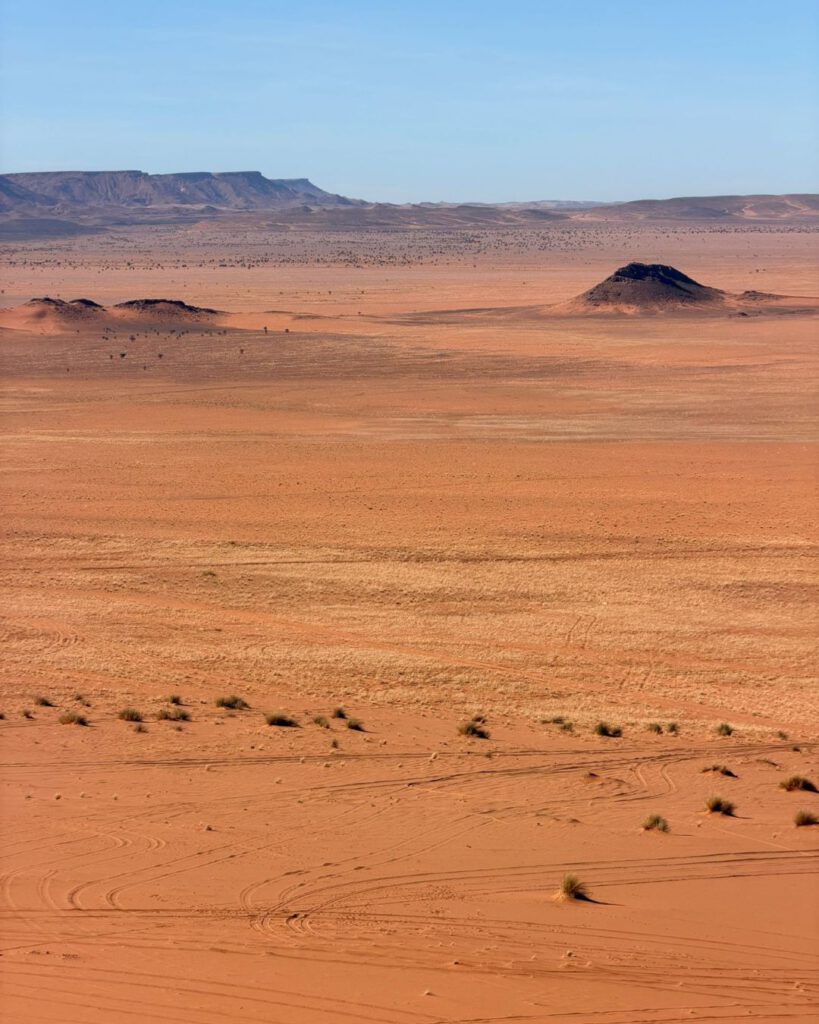
And yes… When most people think of Northern Africa, they imagine endless sand dunes rolling into the horizon. But the reality is far more diverse. The deserts of North Africa are not just oceans of sand, they are surreal rock formations, ancient caravan towns, salt lakes, hidden oases, and landscapes that look like they belong on another planet.
The same happens with the desert landscapes of this region. Even though there is ONE Sahara, the area is so diverse that I would need to hold a talk of 30 minutes to explain why. In this article, I want to sumarize in the easiest way possible what makes each northern African country desert landscape unique and why is it worth visit.
Egypt’s White & Black Desert: The Most Surreal Landscape in Northern Africa
There are deserts with dunes. There are deserts with oases. And then there is Egypt’s White Desert: a place that doesn’t feel like Earth at all.
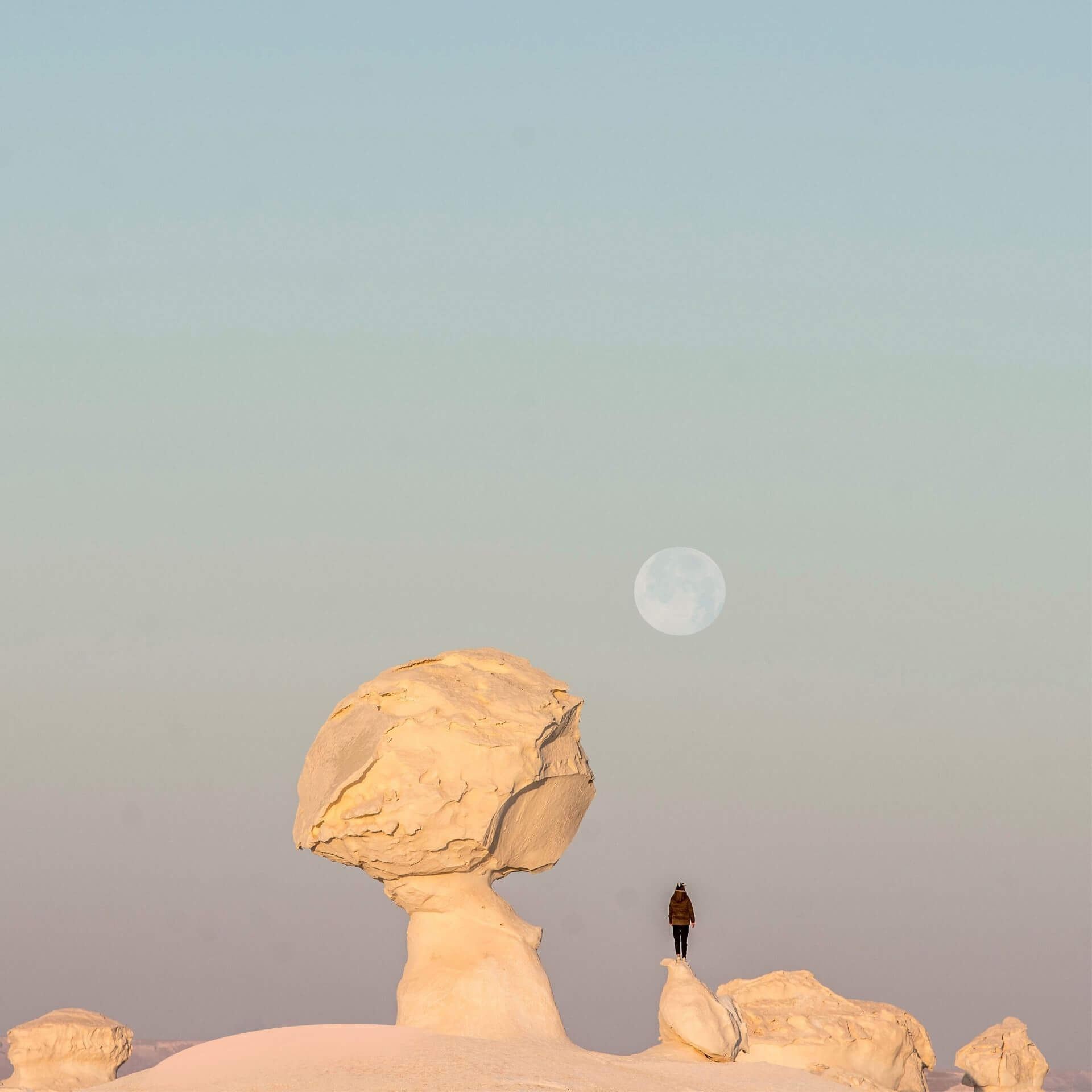
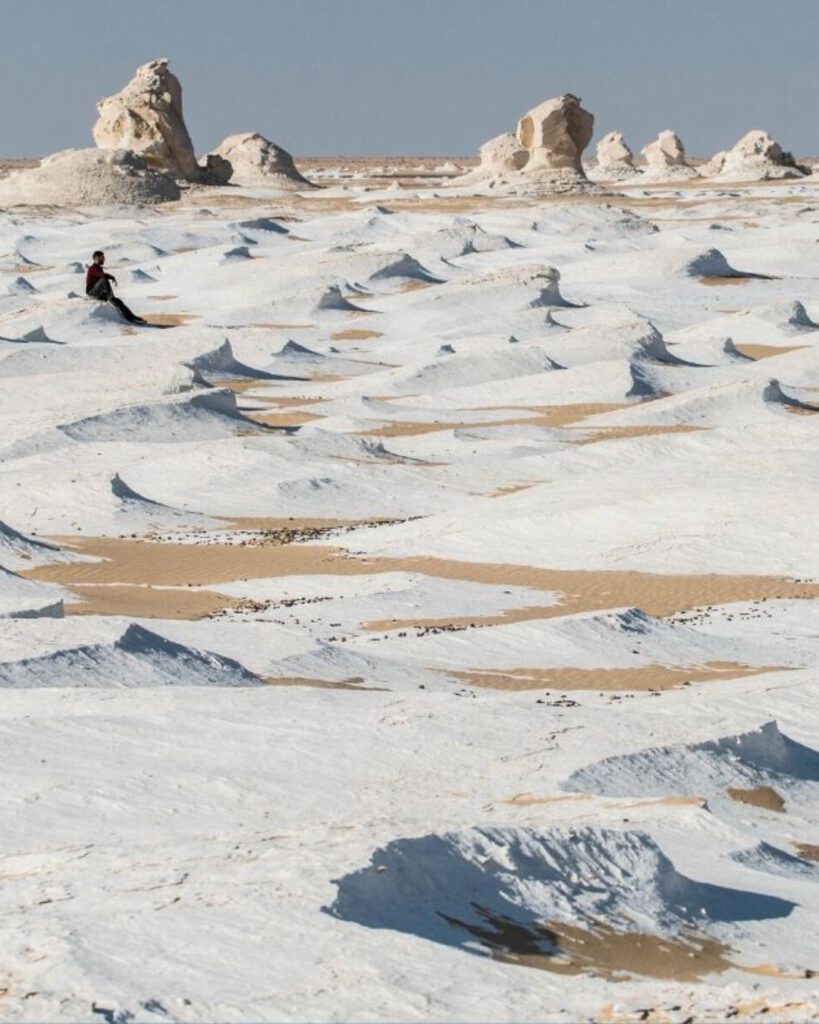
Located about 500 kilometers southwest of Cairo, near the Bahariya Oasis, the White Desert National Park is one of the most unusual desert landscapes in Northern Africa. Unlike the endless sand seas of Morocco or Tunisia, this region is defined by chalk rock formations sculpted by wind over millions of years.
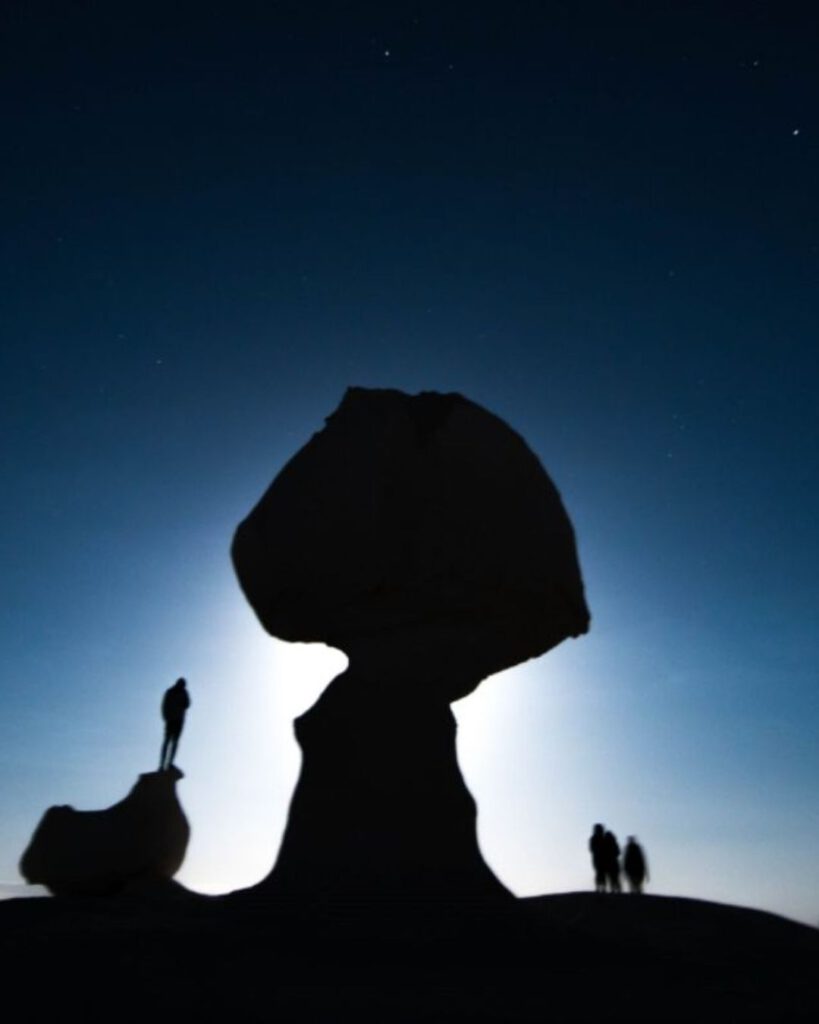
Massive white structures rise from the desert floor like frozen waves, giant mushrooms, or abstract statues. At sunset, the rocks glow in soft shades of gold and pink. At night, under a sky untouched by light pollution, the entire landscape feels almost lunar.
Just before reaching the White Desert, you pass through the Black Desert . This place is a dramatically different environment made up of volcanic hills covered in dark basalt. The contrast between the pale chalk formations and the blackened hills is part of what makes this region so visually powerful. I went to the White and Black Desert in Egypt years ago and it is still on top of my list.
Read more: Everything you need to know about the White and Black Desert in Egypt
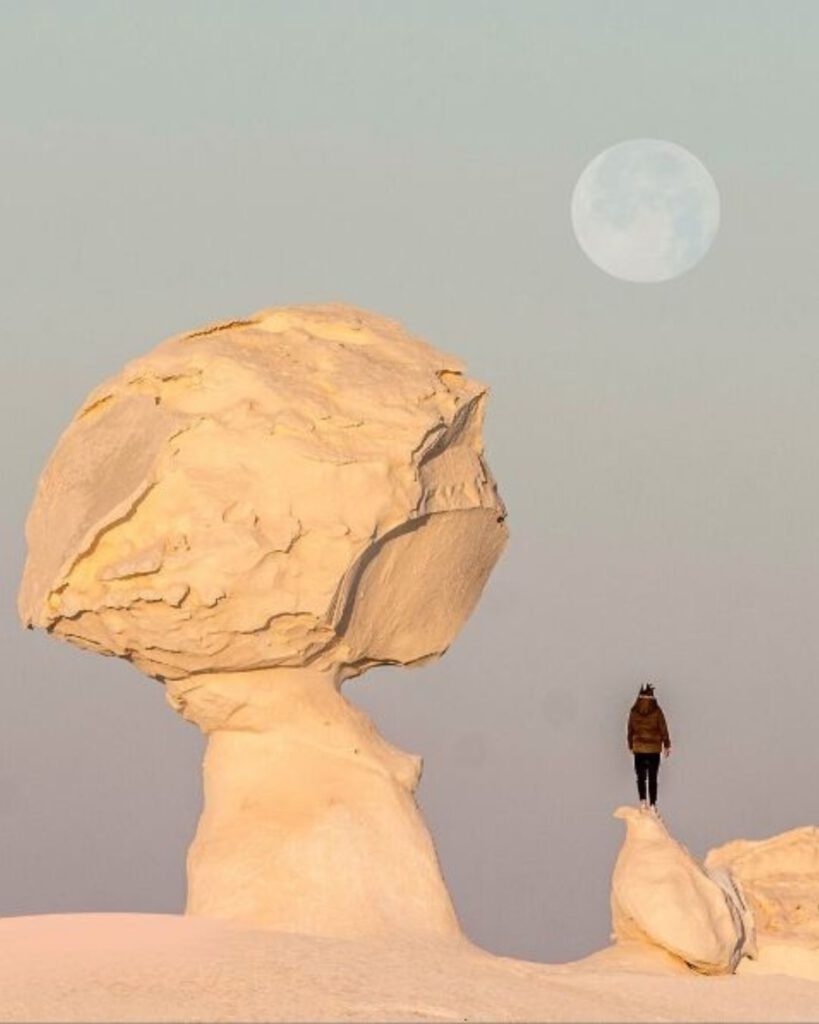
What Makes the White & Black Desert Special
The biggest difference between the White Desert and other desert areas in Northern Africa is texture. If Merzouga in Morocco is about towering dunes and Djanet in Algeria is about sandstone canyons and prehistoric rock art, Egypt’s White Desert is about surrealism.
There are no large dunes here. Instead, you explore a chalk plateau dotted with formations shaped by erosion. Some resemble animals; others look like giant ice cream cones or abstract sculptures. The sense of isolation is immense. Once you leave Bahariya Oasis, the landscape becomes wide, silent, and strangely beautiful.
Camping was one of my highlights. Most tours include an overnight stay where guides cook dinner over an open fire. Watching the sunset fade into deep desert blue and then into a sky full of stars is unforgettable. Because the terrain is flat and open, the horizon feels infinite.
What to Do in the White & Black Desert
A typical tour to the White and Black Desert lasts one to two nights. Activities are not physically intense, but they are immersive.
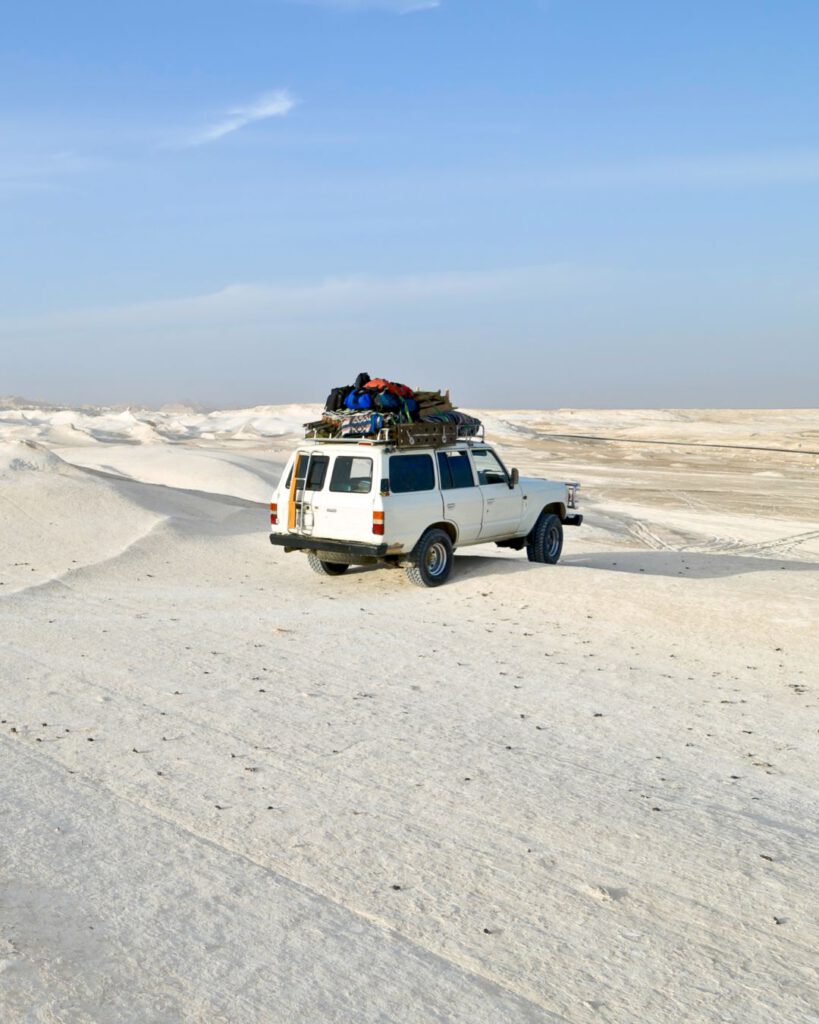
- 4×4 Exploration: Most movement happens by off-road vehicle. The distances between formations are large, and guides know where to stop for the most dramatic views.
- Sunset Photography: The light changes the color of the chalk dramatically. Late afternoon is when the landscape truly shines.
- Camping Under the Stars: With no artificial light, stargazing here is exceptional.
- Sandboarding (in small dune pockets): While this isn’t a dune desert, there are small sandy areas where you can try basic sandboarding.
- Visit Bahariya Oasis: Before or after your desert trip, explore palm groves, hot springs, and small villages in Bahariya.
This is not a place for long trekking expeditions. It is more about short walks, scenic stops, and absorbing the atmosphere.
Prices & Practical Costs
Prices vary depending on group size and level of service.
- 1-night / 2-day tour: Typically between $200–$280 per person.
- 2-night / 3-day tour: Around $280–$500 per person.
- Private tours: Can cost $400–$600+ depending on vehicle, food quality, and customization.
Most packages include:
- 4×4 transport from Bahariya Oasis
- Camping equipment
- Dinner and breakfast
- Guide and driver
- Permits for the national park
Advantages of Egypt Compared to Other Northern African Desert Areas
1. Unmatched Visual Uniqueness
No other desert in Northern Africa looks like this. If you want something visually different from classic dunes, this is the place.
2. Accessibility from Cairo
Egypt is easier to enter than Algeria or Libya. A visa for Egypt happens on arrival. Additionally, flights to Cairo are frequent and often affordable. The city itself is also quite affordable.
3. Lower Cost
It is cheaper than other Sahara experiences in Northern Africa.
4. Short Trip Friendly
You don’t need a full week. A 2–3 day extension works well.
Disadvantages Compared to Other Desert Regions
1. Not a Classic Sahara Dune Experience
If your mental image of the Sahara involves massive rolling dunes like Erg Chebbi (Morocco) or Grand Erg Oriental (Tunisia), you might be disappointed.
2. Less Adventure Depth
In Algeria’s Djanet, you can explore canyon systems and ancient rock art for days. The White Desert feels smaller in scope. One day was more than enough for me.
3. Limited Comfort Infrastructure
There are no high-end desert lodges deep inside the White Desert. Camping is the standard.
Who Is the White Desert For?
The White Desert is perfect for travelers who:
- Love photography
- Want a surreal, almost alien landscape
- Prefer shorter, affordable desert experiences
- Enjoy camping and stargazing
- Are already visiting Egypt’s historical sites
It may not be ideal for travelers seeking:
- High luxury desert camps
- Massive sand dune trekking
- Deep expedition-style exploration or overlanders
Ghadames, Libya: The Desert City That Time Forgot
There are deserts defined by sand. Others by rock. But Ghadames is defined by survival.
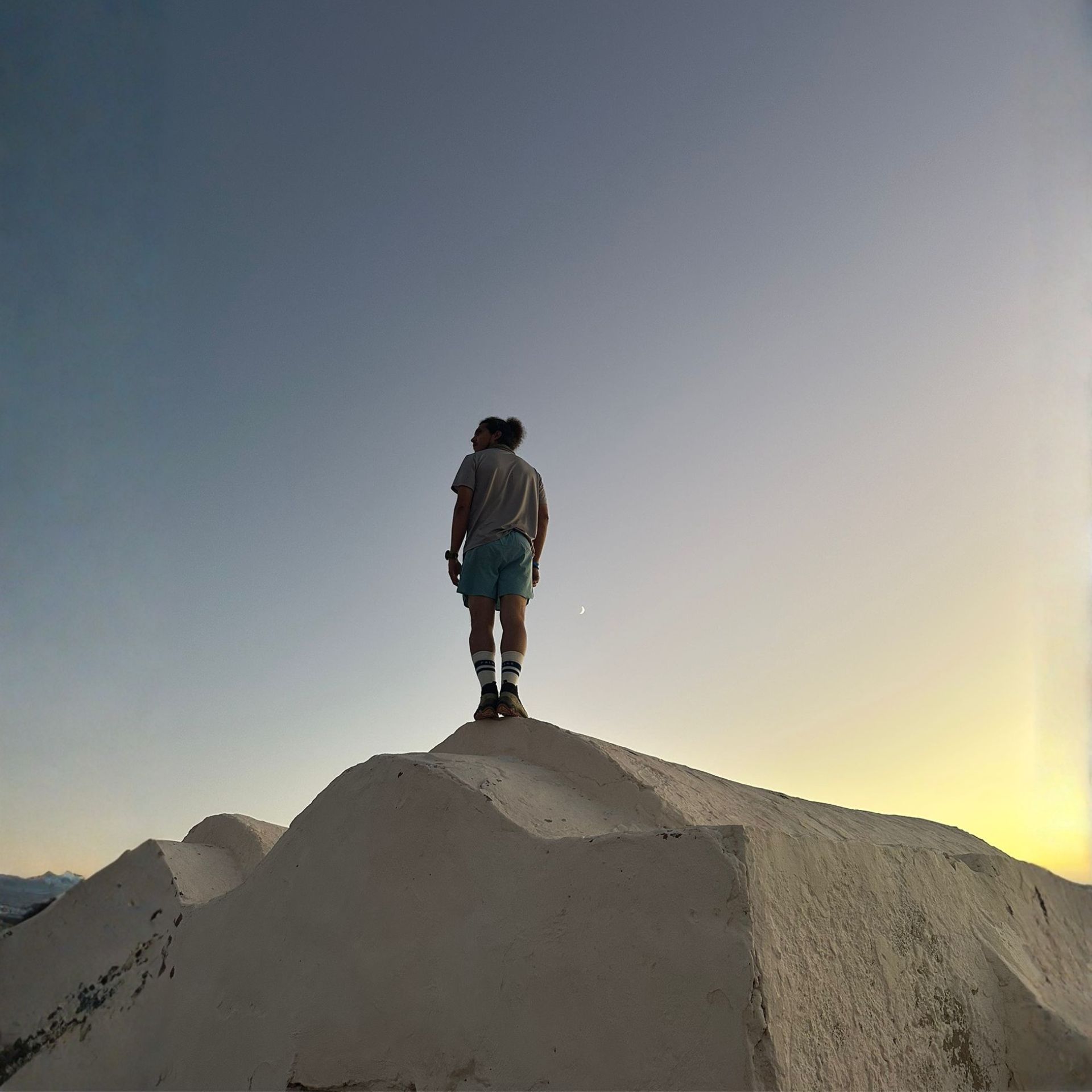
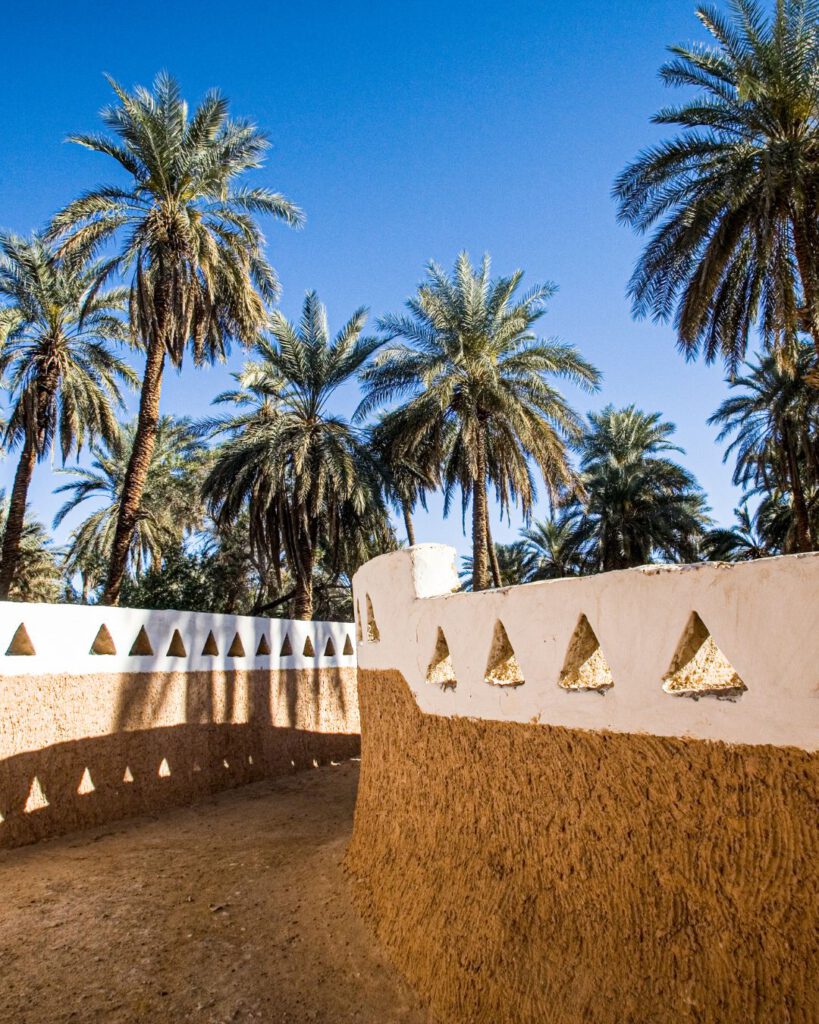
Hidden in a remote corner of western Libya near the borders of Tunisia and Algeria, Ghadames is one of the oldest pre-Saharan settlements in North Africa. I visited this city in 2025 and it was in my opinion, the most beautiful desert village north of the Sahara (only Djene in Mali was prettier). Often called the “Pearl of the Desert,” it is not the landscape alone that makes this place remarkable, it is the architecture, the human adaptation, and the feeling that you’ve stepped into a desert civilization that developed in near isolation for centuries.
Unlike the White Desert in Egypt or the dunes of Morocco, Ghadames is about culture first, landscape second. And that distinction is important when deciding whether it is worth visiting.
What Makes Ghadames Special
Ghadames is a UNESCO World Heritage Site because of its extraordinary traditional mudbrick architecture. The old town is built as a defensive and climate-adaptive system.
From above, it looks like a dense white labyrinth. Inside, it is even more fascinating.
The houses are stacked and connected, forming covered passageways that protect residents from extreme desert heat. The lower levels were traditionally used for storage and keeping animals. The middle levels were living quarters. The rooftops formed a semi-private world where women could move between houses without being seen from the street below.
Outside the old town, date palms stretch across the oasis. Beyond that, the Sahara begins.
It is one of the few places in Northern Africa where you can see how desert life functioned long before modern tourism.
What to Do in Ghadames
A visit to Ghadames is not activity-heavy. It is immersive and reflective.
- Explore the Old Town (Ghadames Old City): The maze of covered alleys is the main highlight. Walking through the shaded corridors feels like entering a living museum.
- Visit Traditional Homes: Some restored houses are open to visitors and show how families once lived.
- Oasis Walks: Explore the surrounding palm groves.
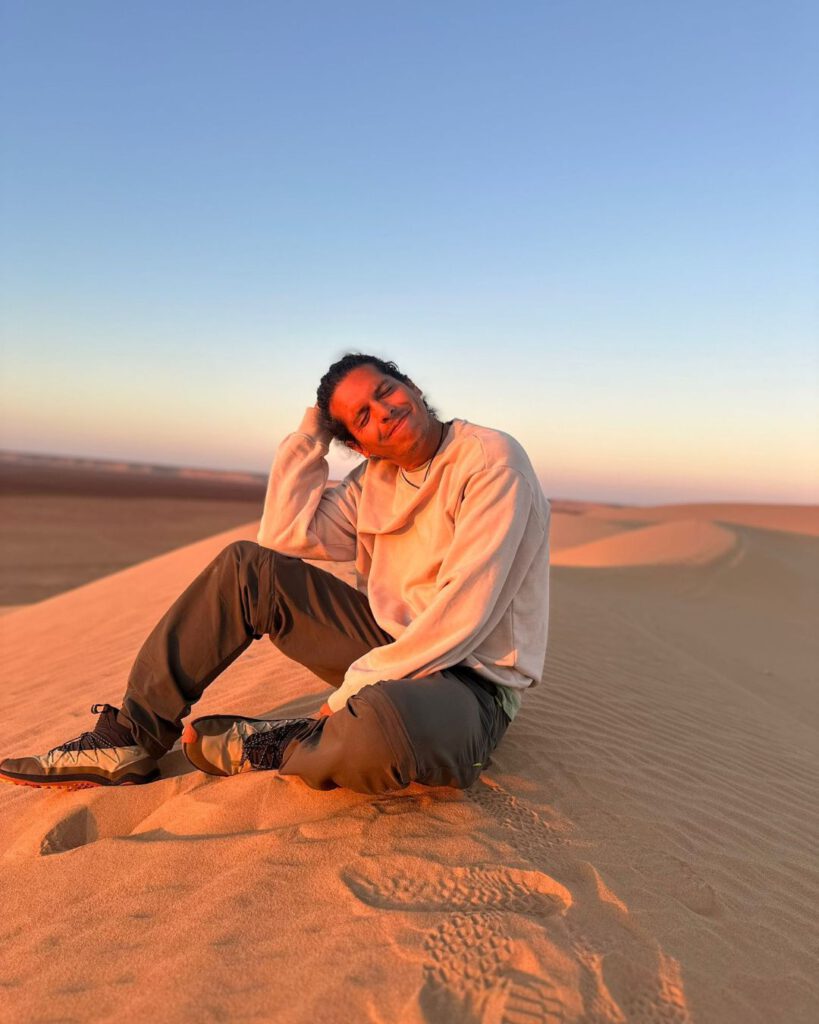
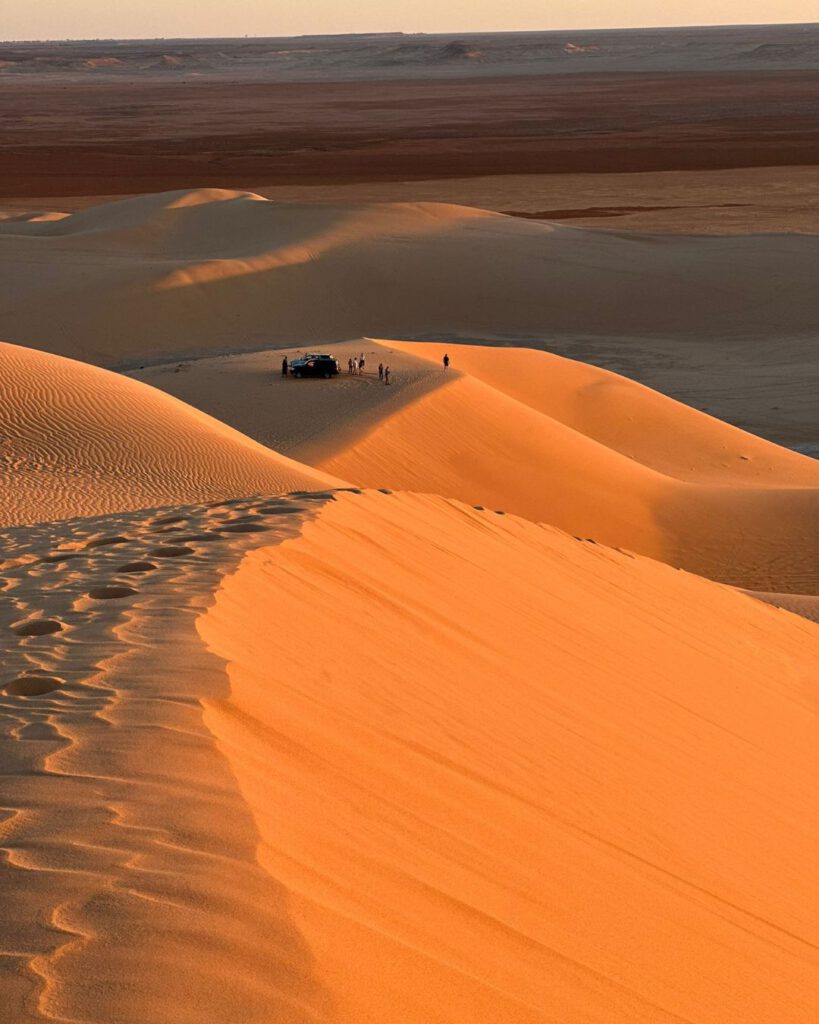
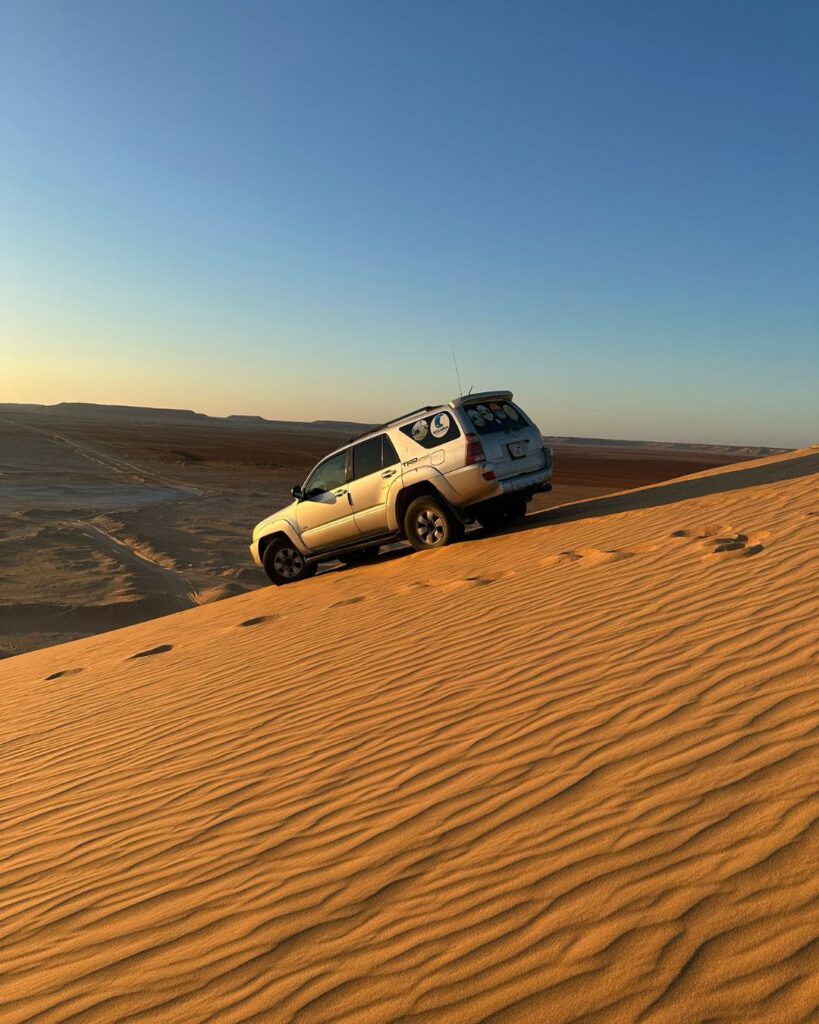
- Desert Excursions: Short 4×4 trips into nearby dunes and rocky desert areas are possible.
- Local Festivals (when operating): Historically, Ghadames hosted cultural festivals celebrating Tuareg and desert heritage.
This is not a destination for dune trekking or sandboarding. It is about atmosphere, architecture, and history.
Prices & Logistics
While Ghadames looks affordable on paper, traveling independently in Libya is not allowed. Tour packages to Ghadames start at $1000 for a 5-day trip and incluide everything.
The issue is that independent tourism is highly restricted. Travel typically requires:
- Organized tour operators
- Government permits
- Security clearances
- Local guides
Flights to Libya are limited, and many governments advise against travel.
The situation is slowly changing and I visited Libya right after they approved the Visa on Arrival program. Still, everything felt very controlled and I couldn’t walk alone – not even for a daily run.
Advantages of Libya Compared to Other Northern African Desert Areas
1. Unmatched Architectural Heritage: No other desert location on this list offers such an intact traditional desert city. Morocco has fortified kasbahs. Tunisia has oasis towns. But Ghadames’ compact, climate-engineered design is unique.
2. Authenticity: Mass tourism never reached the levels seen in Merzouga (Morocco). Even in its more accessible years, Ghadames remained quiet and culturally preserved.
3. Cultural Depth: While Egypt’s White Desert impresses visually, Ghadames impresses differently. It tells the story of trans-Saharan trade, desert survival, and social organization.
Disadvantages Compared to Other Desert Regions
1. Political Instability: This is the biggest drawback. Libya’s ongoing instability makes travel risky or impossible depending on current conditions.
Compared to Morocco (stable tourism industry) or Egypt (regular tourism infrastructure), Libya is far more complex.
2. Logistical Complexity: Visas, permits, and organized tours are required. You cannot simply rent a car and drive there.
Douz & Tozeur, Tunisia: Two Very Different Doors into the Sahara
If you’re planning a desert trip in Northern Africa and Tunisia is on your radar, you’ll quickly come across two names: Douz and Tozeur.
They are often mentioned together. They’re only about 125 kilometers (roughly 2 hours by car) apart. And yet, they offer two completely different desert experiences.
One is raw, dune-heavy, and simple. The other is diverse, comfortable, and visually varied. Choosing between them depends entirely on what kind of desert traveler you are.
Read more: How to plan a road trip around Tunisia
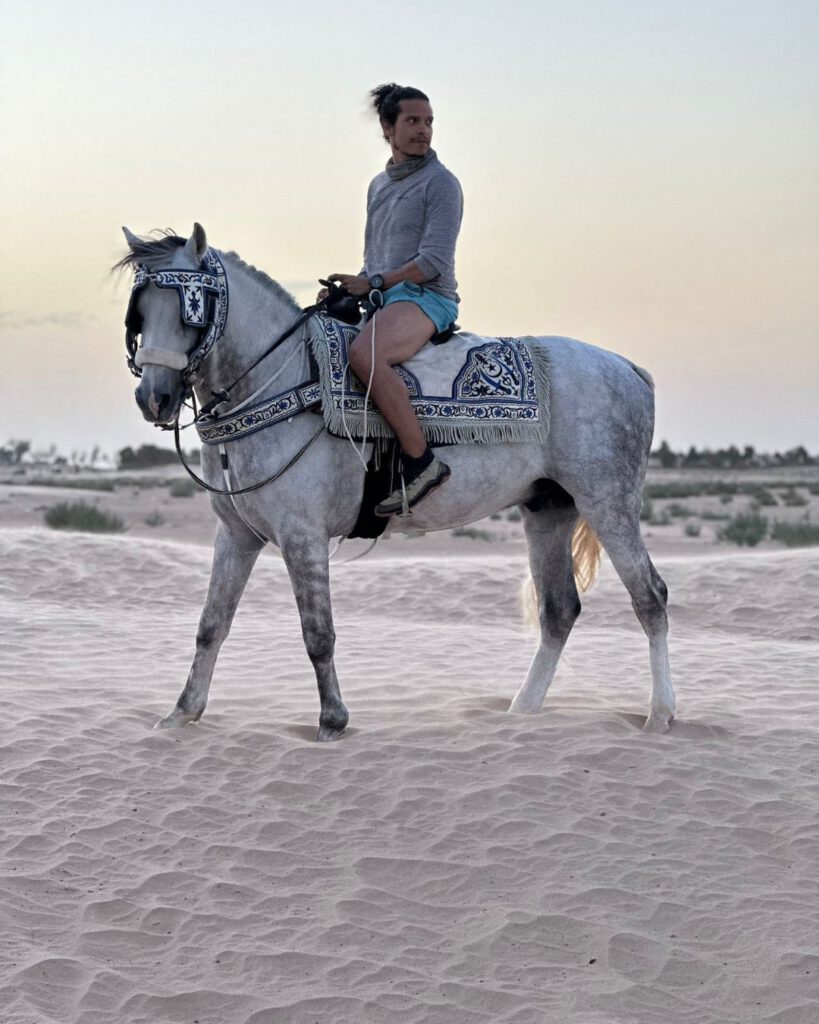
Douz: The Classic Sahara Dune Experience
Douz is often called the “Gateway to the Sahara.” The moment you leave town, the landscape shifts into the Grand Erg Oriental: one of the largest sand seas in the world. This is the rolling golden-dune Sahara many people imagine before they ever visit North Africa.
What Makes Douz Special
The dunes begin almost immediately outside the town. Unlike Morocco’s Merzouga, where tourism infrastructure is highly developed, Douz feels more understated and local. It still carries traces of its Bedouin heritage, and while tourism exists, it hasn’t completely reshaped the town’s identity.
Sunrise and sunset are the highlights here. The sand glows orange and pink, and wind reshapes the dunes overnight, leaving fresh ripples untouched by footprints.
There’s a feeling of scale in Douz. The dunes stretch far into the horizon with little interruption.
What You Can Actually Do in Douz
Most people stay one or two nights.
- Camel treks (short sunset rides or multi-day caravan-style journeys)
- 4×4 expeditions deeper into the Grand Erg Oriental
- Overnight desert camps
- Sandboarding on smaller dune slopes
- Visiting local markets and palm groves
Multi-day desert treks are possible but simpler than in Algeria’s Djanet. Camps are typically traditional Bedouin-style tents rather than luxury glamping domes.
Read more: Exploring the landscapes of Nefta and Tozeaur
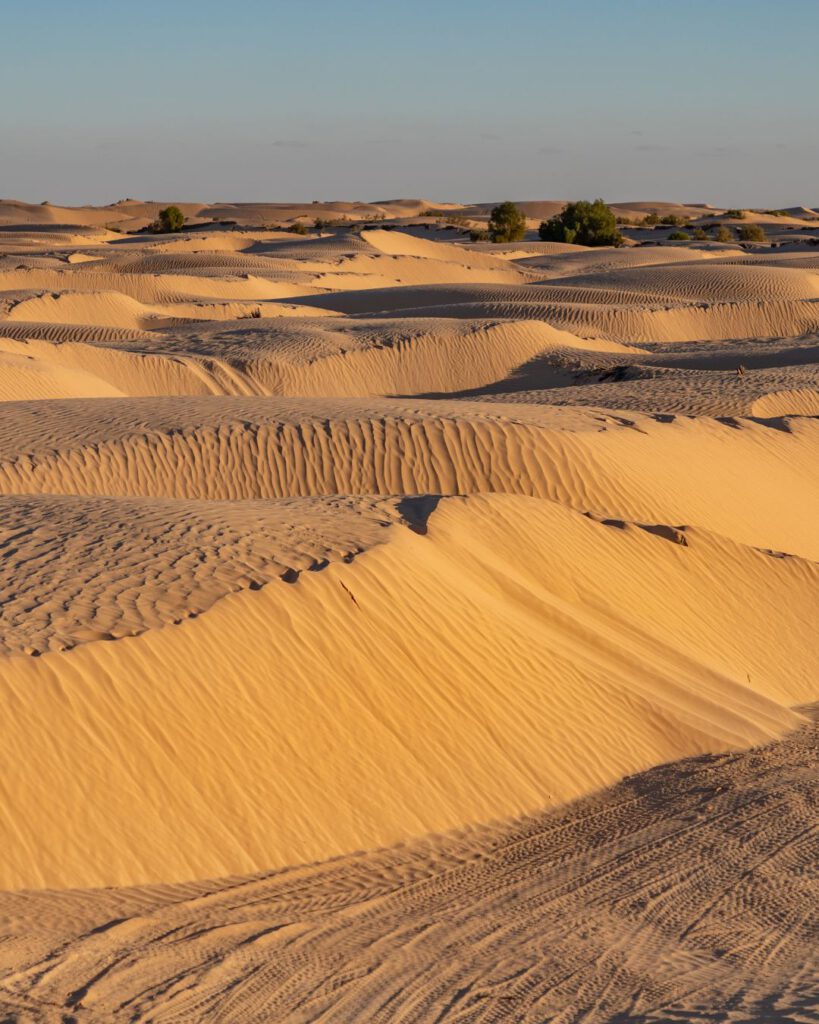
Tozeur: Oasis, Salt Lakes & Desert Variety
Two hours north of Douz, Tozeur offers something different. Instead of being directly immersed in dunes, it sits on the edge of multiple desert ecosystems.
Tozeur is often described as the more comfortable and diverse base for exploring the Tunisian Sahara.
What Makes Tozeur Special
Tozeur is surrounded by one of Tunisia’s largest palm groves — over 400,000 date palms. The town itself is known for its distinctive geometric brick architecture.
Nearby, you’ll find:
- Chott el Jerid, a massive salt lake that reflects mirages and turns pink or white depending on light.
- Mountain oases like Chebika and Tamerza, where rocky canyons and small waterfalls interrupt the desert monotony.
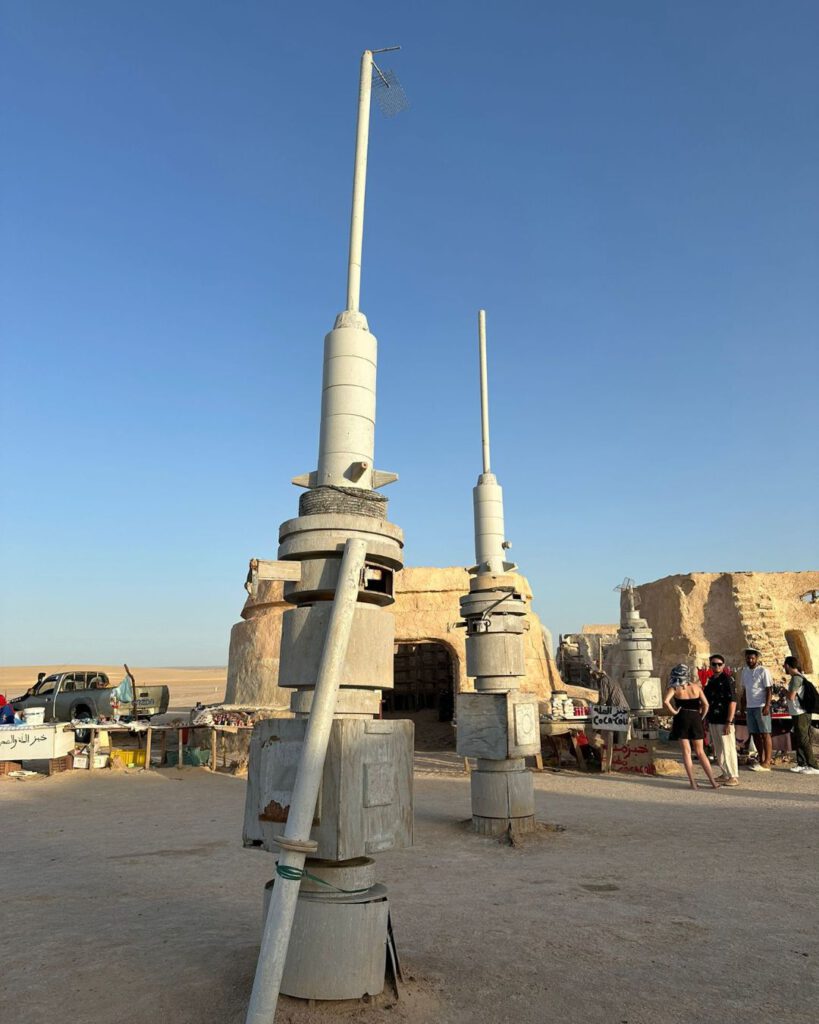
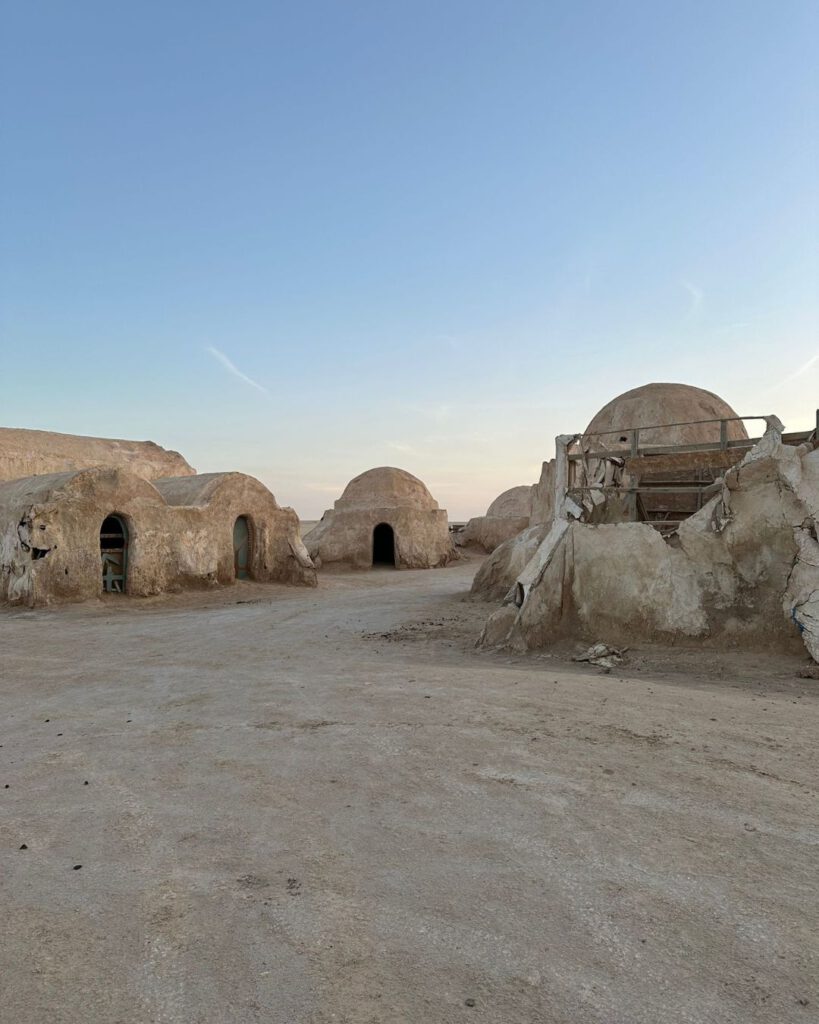
- Star Wars filming locations, including the remains of Tatooine sets.
- Smaller dune systems near Nefta.
This is what sets Tozeur apart. It’s not just dunes. It’s contrast.
Prices in Douz & Tozeaur
Tunisia is affordable compared to Morocco.
- 1–2 hour camel ride: $20–$40
- Overnight desert camp: $80–$150 per person
- 2–3 day desert expedition: $200–$500 depending on comfort level
- Mid-range hotel in town: $30–$80 per night
There are fewer high-end options, which keeps costs down.
Advantages of Tunisia Compared to Other Northern African Deserts
1. Authentic dune landscape without heavy commercialization
Compared to Merzouga (Morocco), Douz feels less curated and less crowded.
2. Affordable desert experience
Tunisia is generally cheaper than Morocco.
3. Large, real Sahara dunes
Unlike Egypt’s White Desert (which has no massive dunes), Douz offers the classic sand sea.
4. Easier than Algeria
While Algeria’s Djanet is more dramatic, Douz is far simpler logistically.
Disadvantages of Tunisia
1. Limited landscape diversity
Unlike Tozeaur and Douz are primarily about dunes. Few rock formations, no dramatic canyons.
2. Simpler infrastructure
Fewer upscale accommodations compared to Morocco.
3. Can feel repetitive
After one sunset and one sunrise, the scenery remains similar.
4. Fewer cultural highlights
Compared to Ghadames (Libya), Tunisia’s Sahara is landscape-focused.
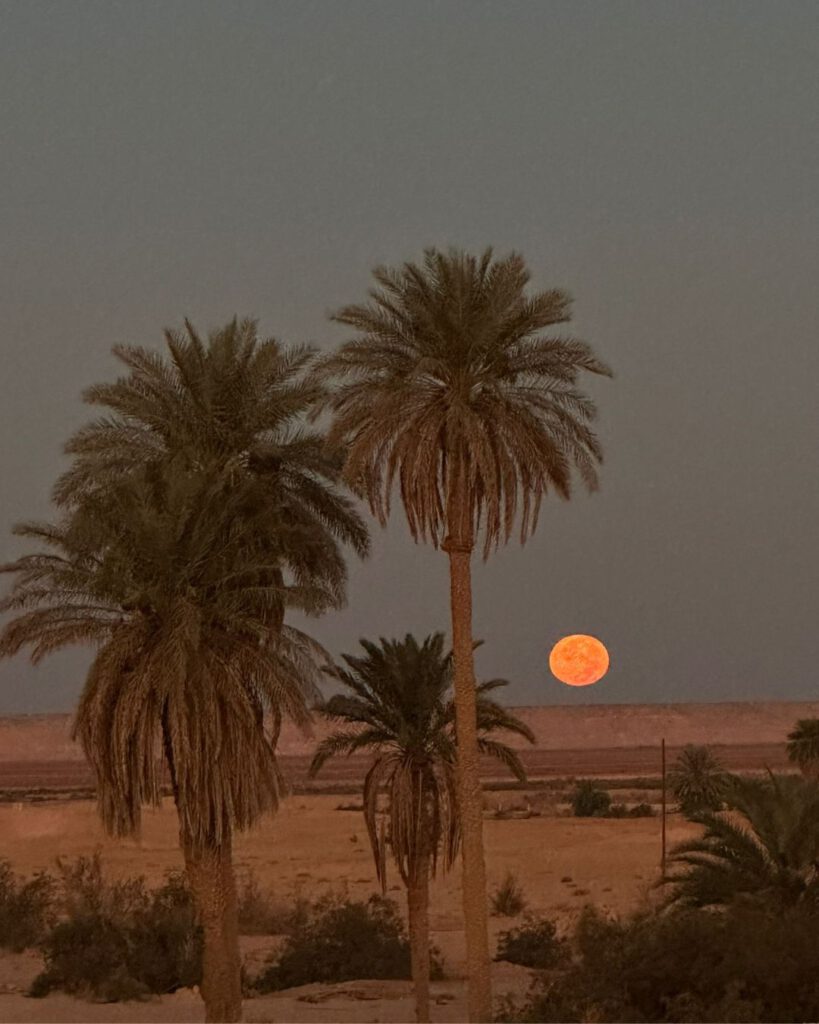
Djanet, Algeria: The Wildest Desert Landscape in Northern Africa
If Douz is the classic Sahara and Tozeur is the balanced oasis experience, then Djanet is the raw heart of the desert.
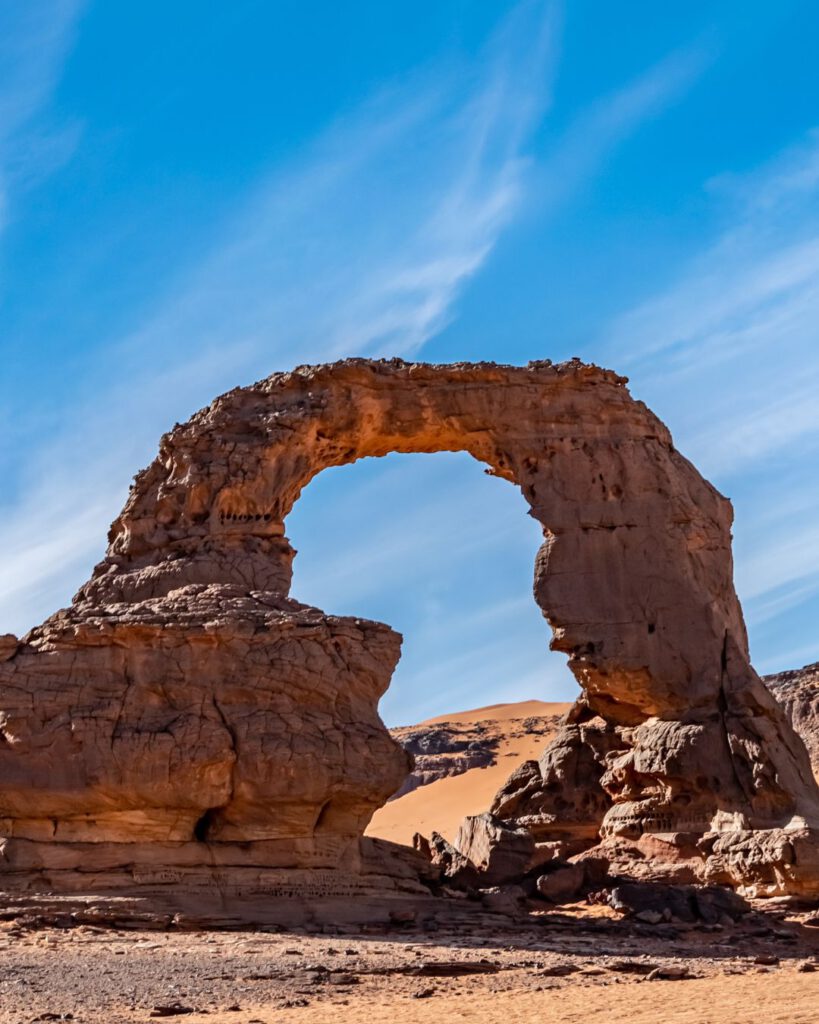
Located in southeastern Algeria near the Libyan border, Djanet is the gateway to Tassili n’Ajjer National Park. This is one of the most dramatic and visually diverse desert regions in the world. This is not just a sand dune destination. It’s a geological masterpiece filled with towering sandstone formations, natural arches, labyrinth-like canyons, prehistoric rock art, and endless dunes that feel untouched by mass tourism.
If you’re looking for the most powerful desert landscape in Northern Africa in terms of scale and wilderness, Djanet is often the strongest contender.
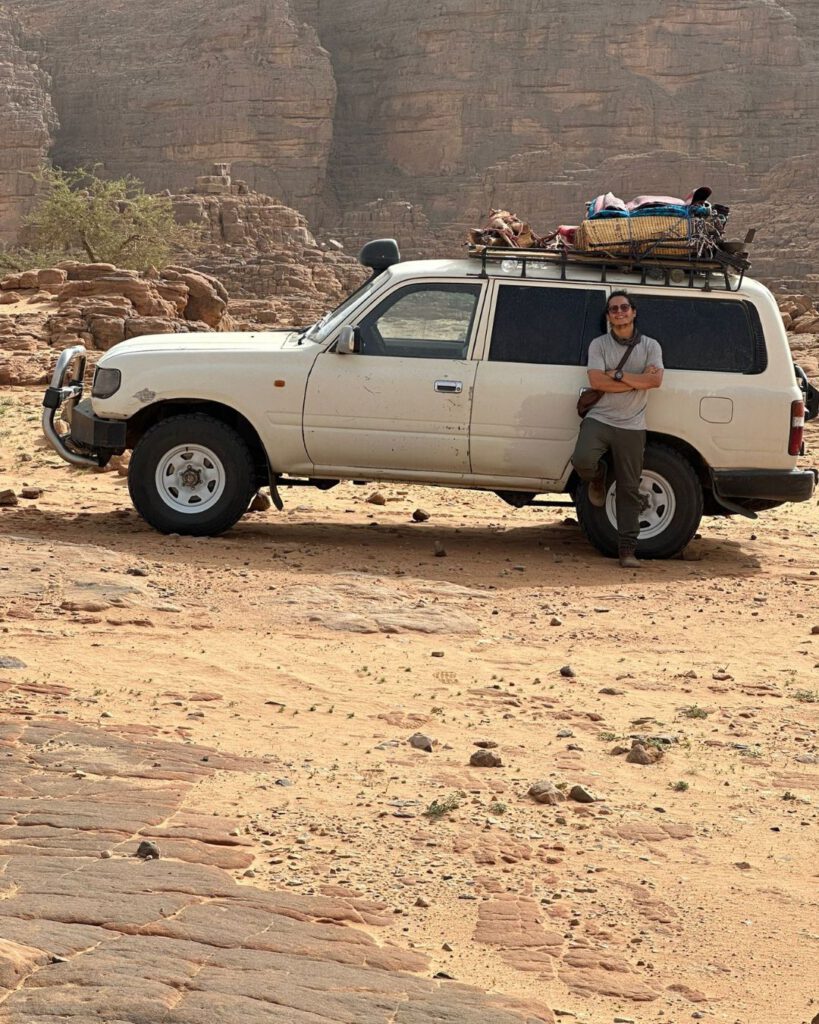
What Makes Djanet Special
Djanet is different from Morocco, Tunisia, or Egypt in one major way: diversity of terrain.
Within a single expedition, you can see:
- Massive dune fields
- Sandstone forests shaped like cathedrals
- Natural stone arches
- Deep canyon systems
- Prehistoric cave paintings
- Rocky plateaus that look like Mars
The Tassili plateau rises dramatically above the surrounding dunes. Wind erosion has carved the sandstone into surreal shapes: giant pillars, arches, and balanced rock formations.
Unlike Egypt’s White Desert (which is compact and relatively small), Tassili feels vast and complex. You can spend several days exploring and still feel like you’ve barely scratched the surface.
And then there is the rock art.
Some of the cave paintings in Tassili are over 8,000 years old, depicting animals like giraffes and cattle that once roamed the region when the Sahara was greener. It’s one of the most significant prehistoric art collections in the world.
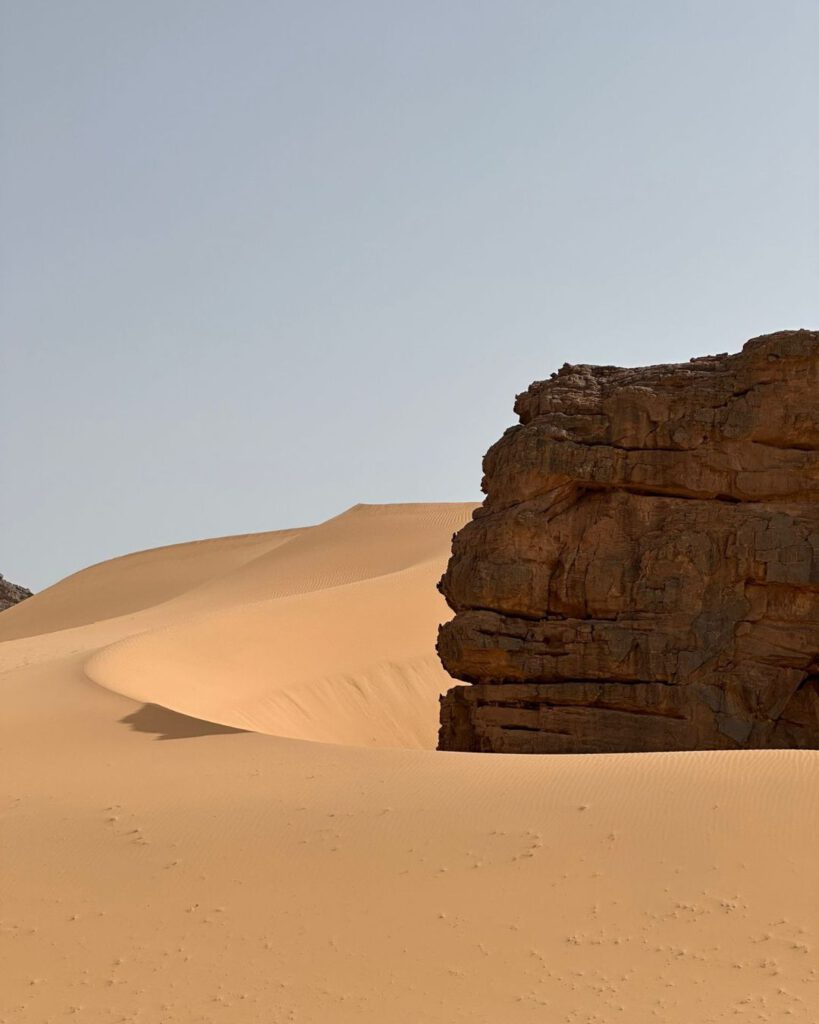
What You Can Actually Do in Djanet
Djanet is not a quick overnight stop. It is an expedition destination.
Most visitors stay 3–6 days, sometimes longer.
Typical activities include:
- Multi-day 4×4 expeditions into Tassili n’Ajjer
- Hiking through sandstone formations
- Visiting prehistoric rock art sites
- Camping under the stars
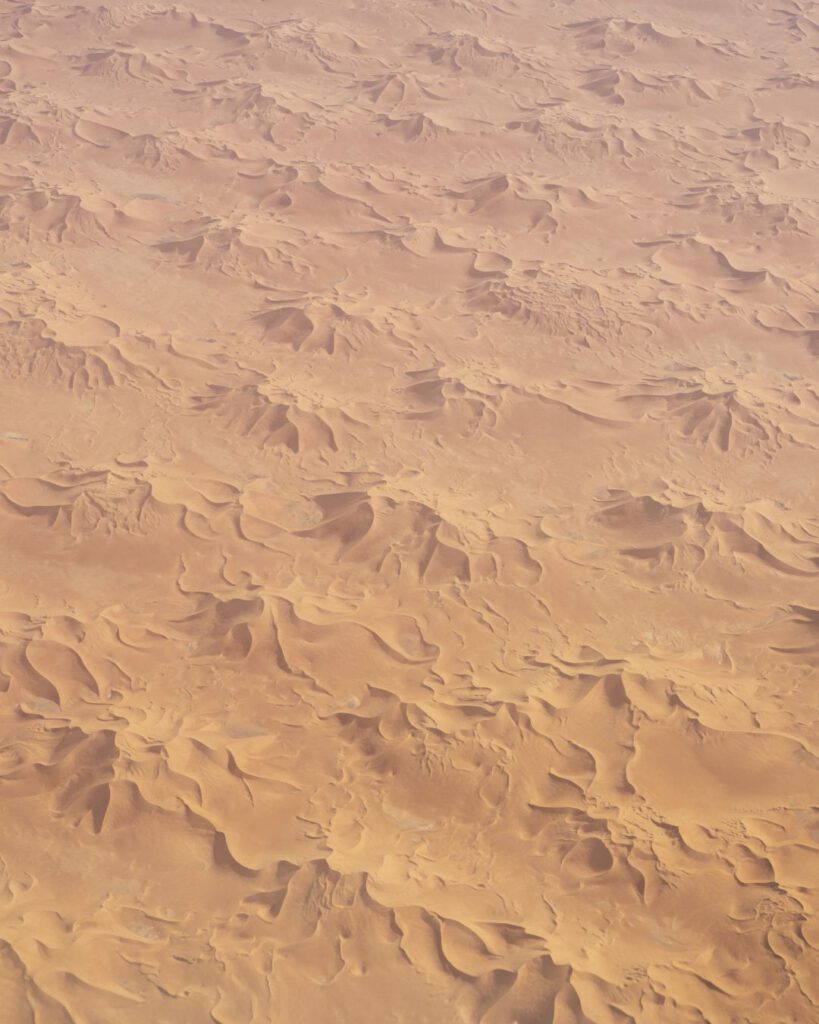
- Exploring massive dune fields near Tin Merzouga
- Walking through narrow canyon systems
Camping is part of the experience. Nights are spent in remote desert camps with minimal light pollution.
This is a place for long horizons and silence.
Prices & Practical Costs
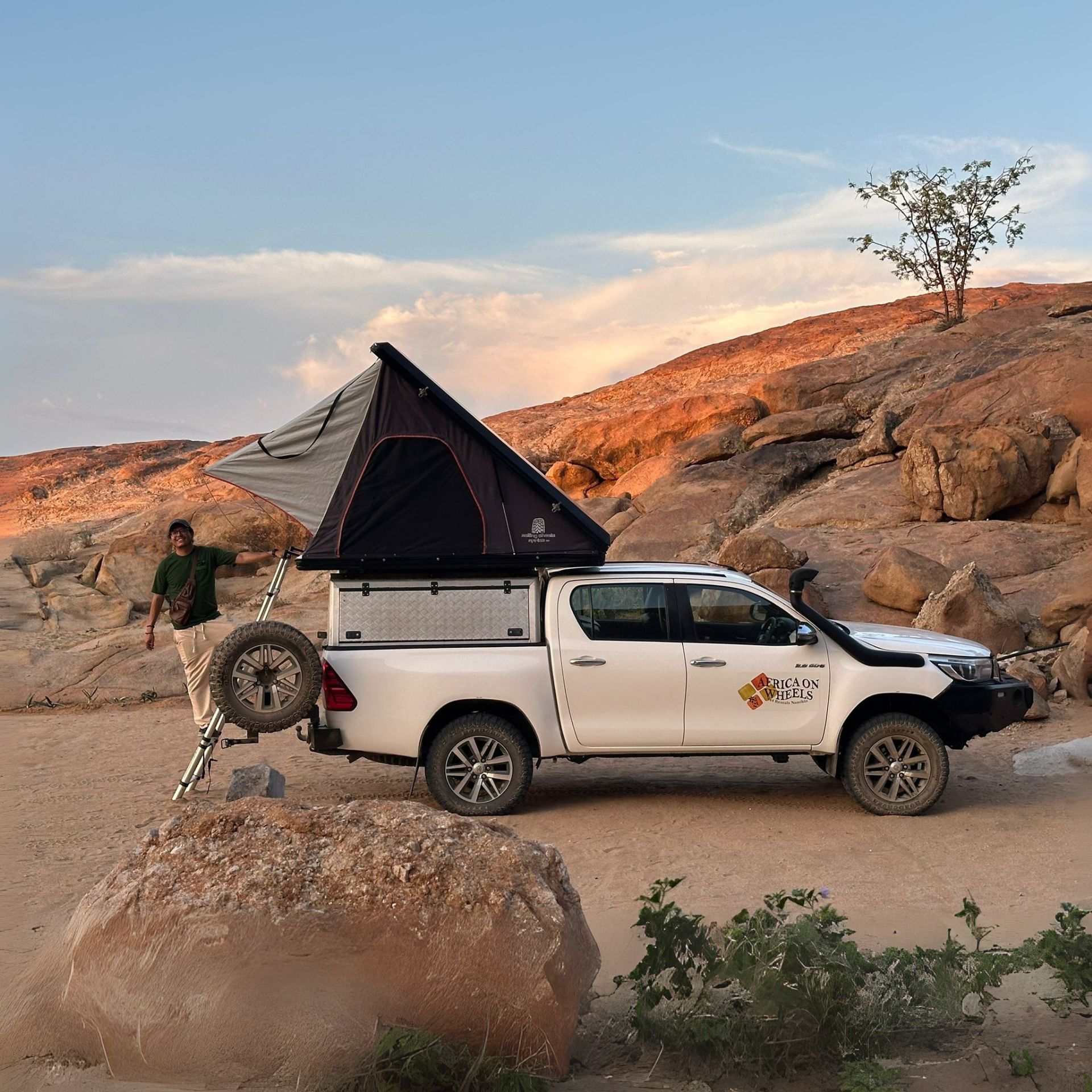
Algeria requires planning. Independent travel in this region is rare. I wanted to travel independently, but I was stopped at the airport and been told that without a guide, I would need to go back. Fortunately, my airbnb host had a travel company and was able to plan an itinerary for me very quickly.
Just like in Libya, Algeria is cheap on paper. Food is cheap, flights are cheap, accomodation is cheap. Unfortunately, when you rely on an operator to book everything, prices go up in ridiculous ways.
Estimated costs:
- 3–4 day guided desert expedition: $400–$900 per person
- 5–7 day expedition: $800–$1,500 depending on services
- Basic accommodation in Djanet town: $30–$70 per night
- Domestic flight from Algiers to Djanet: $100–$200
A guide is mandatory for visiting Tassili n’Ajjer.
Compared to Tunisia, Djanet is more expensive. Compared to Morocco’s luxury camps, it can be similar.
Advantages of Algeria Compared to Other Northern African Deserts
1. Unmatched Landscape Diversity: No other desert area on this list combines dunes, canyons, arches, and prehistoric art at this scale.
- More dramatic than Douz.
- More diverse than Merzouga.
- More expansive than Egypt’s White Desert.
2. Extremely Low Tourism Density: Unlike Morocco’s Sahara, you won’t see lines of camel caravans. You may not see other groups at all.
This creates a feeling of real wilderness.
4. True Expedition Feel: This is not a curated, Instagram-ready desert. It feels raw and powerful.
Disadvantages of Djanet
1. Visa Complexity: Even though this is slowly changing, Algeria’s visa process can be lengthy and requires documentation (especially compared to Egypt, Morocco and Tunisia, where most nationalities get visa on arrival or visa free access)
2. Limited Flights: Fewer international connections compared to Morocco or Egypt.
3. Requires Guided Tours: You cannot simply self-drive into Tassili n’Ajjer.
4. Less “Easy” for First-Time Desert Travelers: The scale and remoteness can feel overwhelming if you’re new to desert travel.
Merzouga, Morocco: The Most Iconic Sahara Experience in Northern Africa
If there is one desert destination in Northern Africa that has become synonymous with the Sahara, it is Merzouga.
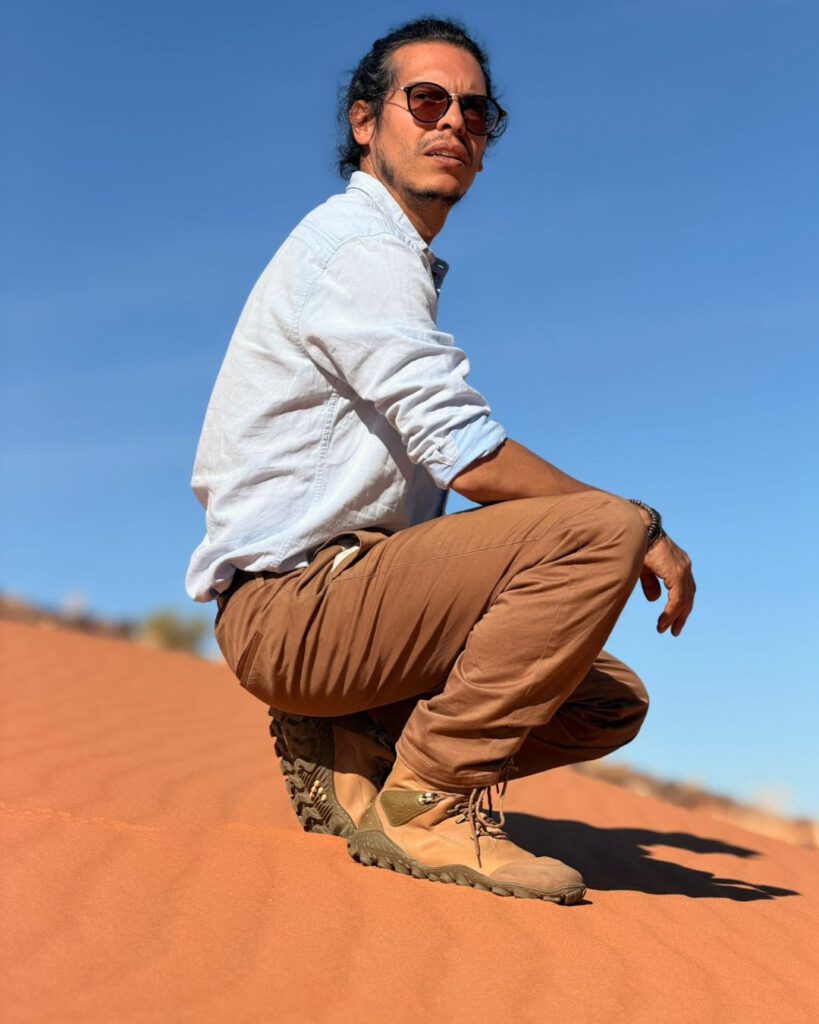
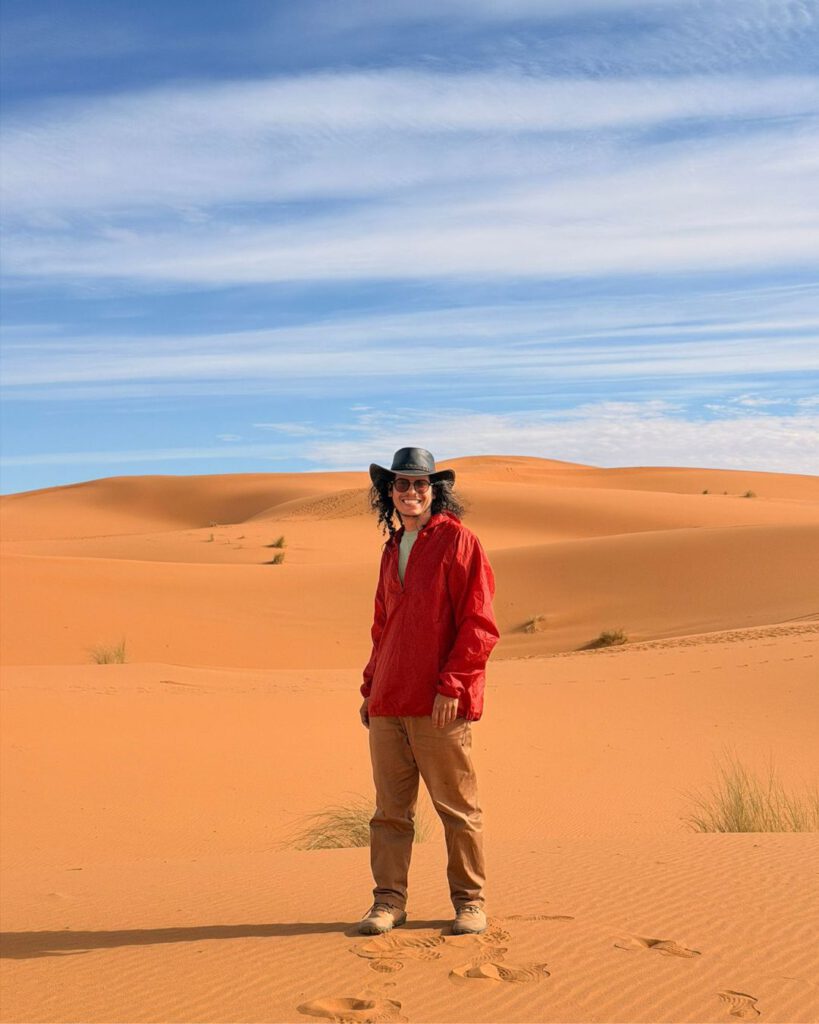
Located in southeastern Morocco near the Algerian border, Merzouga sits at the edge of the Erg Chebbi dunes, a dramatic sea of sand rising up to 150 meters high. For many travelers, this is the desert they’ve always imagined: towering golden dunes, camel caravans at sunset, and nights spent in tents under an ocean of stars.
But is Merzouga truly the best desert landscape in Northern Africa? Or is it simply the most famous?
Let’s take a detailed look — including what makes it special, what it costs, when to go, and how it compares to places like Djanet, Douz, Tozeur, or Egypt’s White Desert.
What Makes Merzouga Special
The first thing you notice in Merzouga is scale.
Unlike Tunisia’s Douz, where dunes roll gently into the horizon, the Erg Chebbi dunes rise sharply and dramatically. Climbing one of the higher dunes at sunrise reveals wave after wave of sand stretching into the distance.
The second defining feature is accessibility. Morocco has built a strong tourism infrastructure around Merzouga. You can drive there on paved roads, book organized tours from Marrakech or Fes, or rent a car and travel independently.
And then there is the atmosphere. At sunset, dozens of camels slowly make their way across the dunes, creating silhouettes that feel almost cinematic. It’s photogenic, yes — but undeniably powerful.
What You Can Actually Do in Merzouga
Merzouga offers more variety than many other dune destinations.
Typical activities include:
- Camel trekking at sunset or sunrise
- Overnight desert camps (standard or luxury)
- Quad biking and dune buggy tours
- Sandboarding
- 4×4 desert excursions to nomadic communities
- Visiting fossil quarries and nearby desert villages
- Multi-day Sahara tours connecting Fes or Marrakech
Luxury desert camps are a major draw here. Many include private bathrooms, large beds, gourmet Moroccan dinners, and live music around the fire.
This is one of the biggest differences between Merzouga and places like Douz or Djanet.
Prices & Practical Costs
Merzouga offers the widest price range of any desert destination in Northern Africa.
- Camel sunset ride: $20–$50
- Standard overnight camp: $80–$150 per person
- Luxury desert camp: $250–$600 per night
- 3-day Marrakech-to-Sahara tour: $150–$500 depending on level of comfort
- Mid-range riad in Merzouga: $40–$120 per night
Compared to Tunisia, Morocco is more expensive. Compared to Algeria, it is easier but can cost similar amounts depending on camp style.
Advantages of Morocco Compared to Other Northern African Deserts
1. Accessibility & Infrastructure: Morocco is one of the easiest countries in North Africa to travel independently. Roads are good, tourism services are reliable, and English or French is widely spoken.
Compared to Algeria (visa complexity) or Libya (political instability), Morocco is far simpler.
2. Massive, Dramatic Dunes: Erg Chebbi’s dunes are among the tallest and most visually impressive in the region.
They are larger and more dramatic than those near Douz in Tunisia.
3. Wide Range of Accommodation: From budget camping to luxury glamping, Merzouga offers options for all travel styles.
Tunisia has fewer high-end options. Egypt’s White Desert offers mainly camping.
Disadvantages of Morocco
1. High Tourism Levels: Merzouga is popular. During peak season, the desert can feel busy, especially at sunset.
If you’re looking for total solitude like in Djanet (Algeria), you may not find it here.
2. Commercialized Experiences: Camel tours and desert camps can feel standardized. Some travelers find it less authentic than Tunisia or Algeria.
Luxury camps significantly increase costs compared to Douz or Egypt.
4. Less Landscape Diversity: Unlike Djanet’s mix of canyons and arches or Tozeur’s salt lakes, Merzouga is primarily about dunes.