
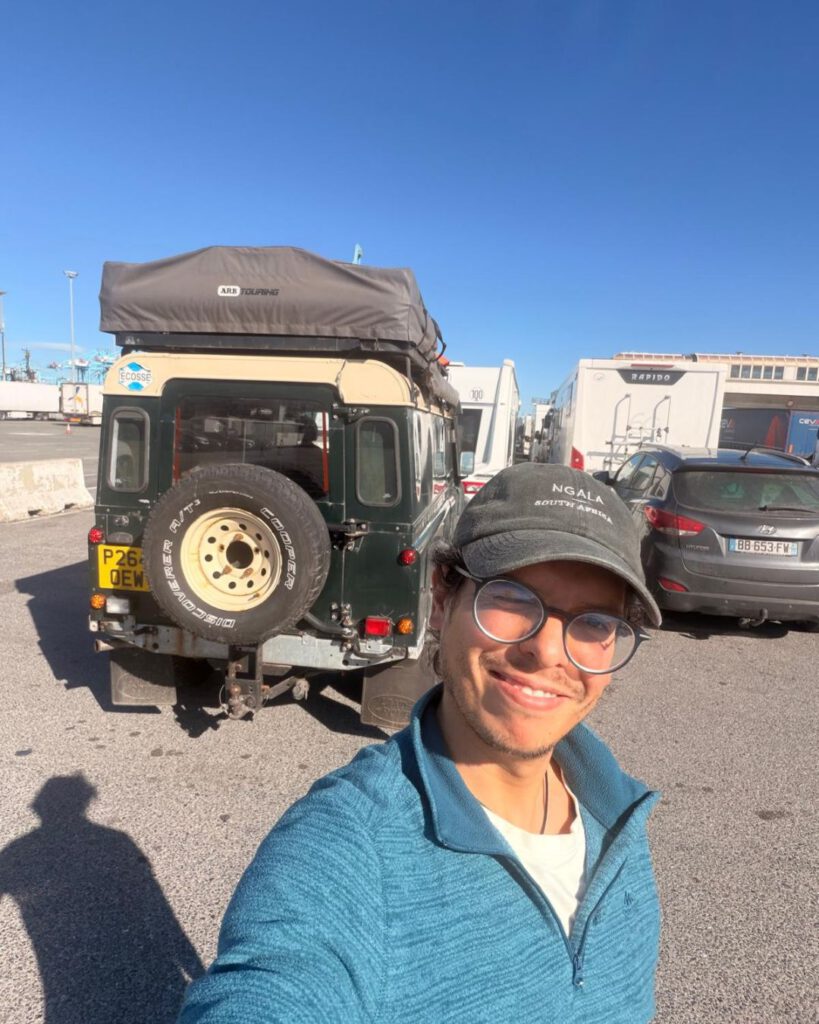
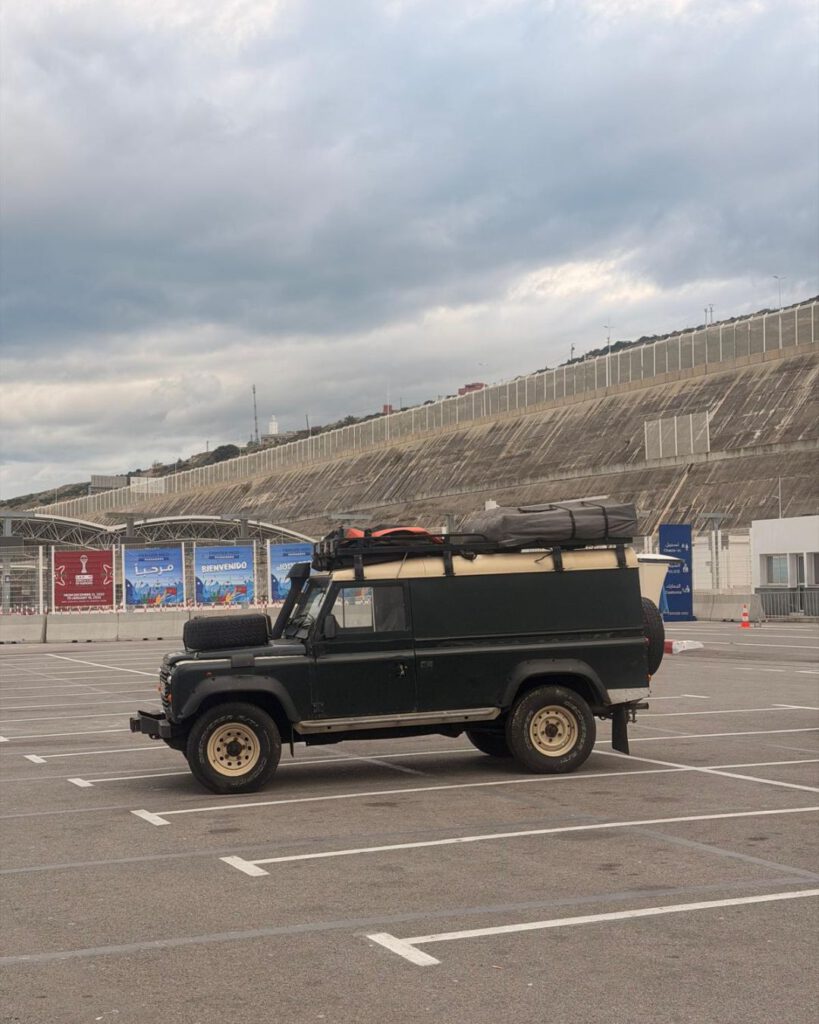
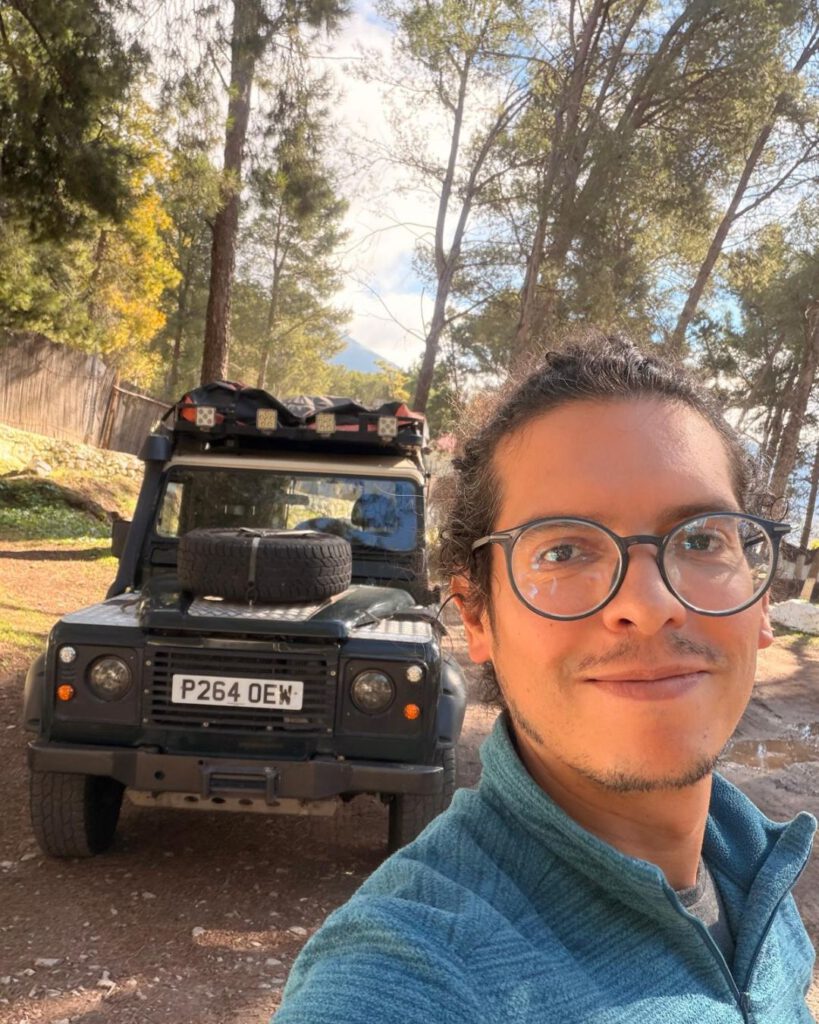
I crossed from Algeciras into Tangier with my Land Rover Defender with UK plates.
I’ll be honest with you. When I first started looking into driving my own car to Morocco, I found a lot of conflicting information online. Some blogs made it sound impossibly complicated. Others glossed over the details so quickly that I arrived at the port with more questions than answers. So after doing it myself, I wanted to write the guide I wish I had found before I left.
Here is everything that actually happened, and everything you need to know before you go.
Getting to the Ferry
I drove down to Algeciras, in the very south of Spain, which is where most people with cars cross from. You could also leave from Tarifa. It is slightly closer to Morocco and the crossing to Tangier Ville takes about an hour, but Tarifa is a small port that closes when the wind picks up, and I did not want to risk getting stuck. Also, the ferry from Tarifa goes straight to the heart of Tangier and I wanted to avoid a hard drive. At the end, Algeciras felt like the safer bet. The crossing to Tangier Med takes around 90 minutes and there are up to 30 departures a day in summer, so if you miss one you just catch the next.
There are several ferry companies operating this route. Baleària, DFDS, Africa Morocco Link, Naviera Armas, and Trasmediterránea are the main ones. My advice is not to just go with whoever you have heard of. I compared prices across Ferryhopper before booking and found that the same crossing on the same day varied by almost 30 percent between operators. For a car and two passengers, expect to pay somewhere between €180 and €250 one way, depending on the season and who you book with. Book online in advance, especially in summer. Vehicle spaces fill up fast and prices only go up closer to the date.
Spain to Morocco — Ferry Ticket Prices
One-way fares. Prices vary by operator, season, and availability. Updated May 2026.
| Ticket Type | Season | Price (€) One Way |
|---|---|---|
| Foot Passenger (no vehicle) | ||
| Foot passenger Adult, no vehicle | Low season | From €30 |
| Foot passenger Peak Jul – Aug | High season | €80 – €130 |
| With Vehicle | ||
| Car + 1 passenger Standard vehicle under 4m | Low / mid season | €100 – €160 |
| Car + 2 passengers Average Most common traveller configuration | Average | €180 – €250 |
| Car + 2 passengers Peak Jul – Aug, book 6+ weeks ahead | High season | Up to €260 |
| Ticket Type | Season | Price (€) One Way |
|---|---|---|
| Foot Passenger (no vehicle) | ||
| Foot passenger Adult, no vehicle | Low season | From €40 |
| Foot passenger Peak Jul – Aug | High season | €80 – €130 |
| With Vehicle | ||
| Car + 1 passenger Standard vehicle under 4m | Low / mid season | €110 – €160 |
| Car + 2 passengers Average Most common traveller configuration | Average | €160 – €220 |
| Round trip avg Round Trip Car + 2 passengers, both directions | Average | ~€286 |
One thing I did not realise until I arrived at the port: even though I had booked online, I still needed to collect a physical boarding pass from the ferry company’s ticket office before I could check in. It took five minutes, but it is worth knowing so you are not caught off guard. Arrive at least 90 minutes before departure if you have a car.
Leaving Spain
The check-in process on the Spanish side is straightforward. You follow the signs, show your boarding pass, and wait in a holding area with the other vehicles. At some point you are waved forward to Spanish passport control, your passport gets stamped as you exit the Schengen zone, and then staff direct you onto the ferry and show you where to park.
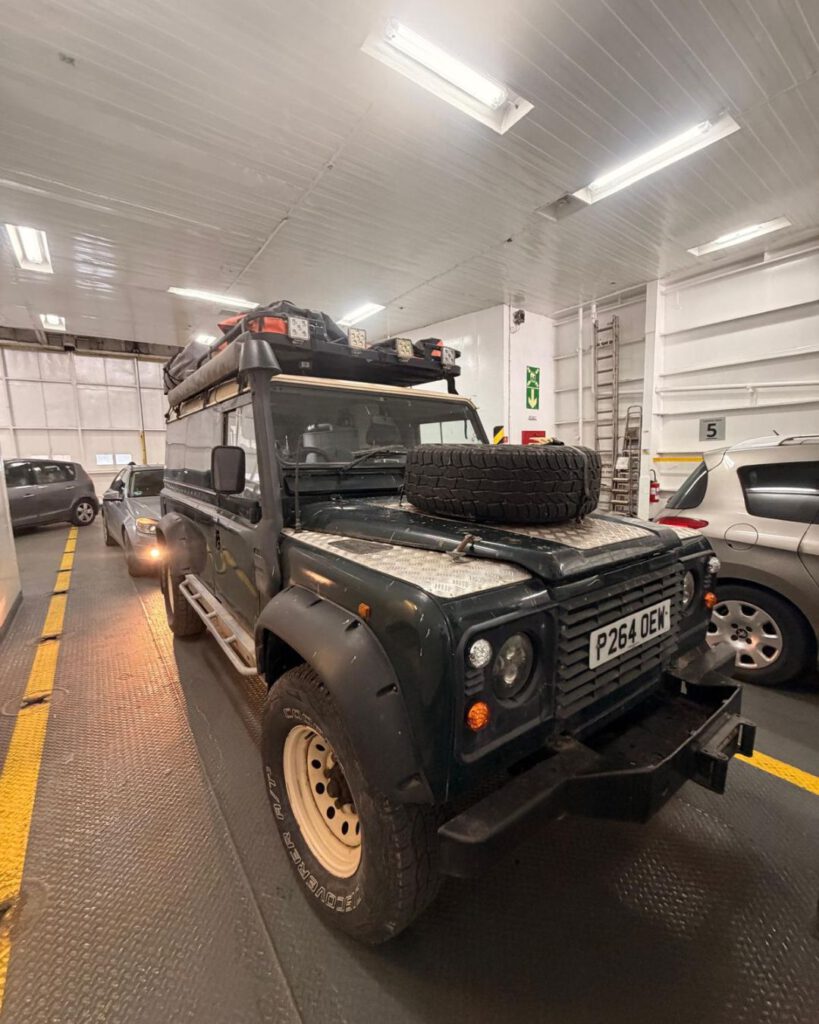
Once your car is parked, you have to go up to the passenger deck. You cannot stay with your vehicle during the crossing, which I found slightly nerve-wracking the first time. Everything was fine, of course.
The Crossing
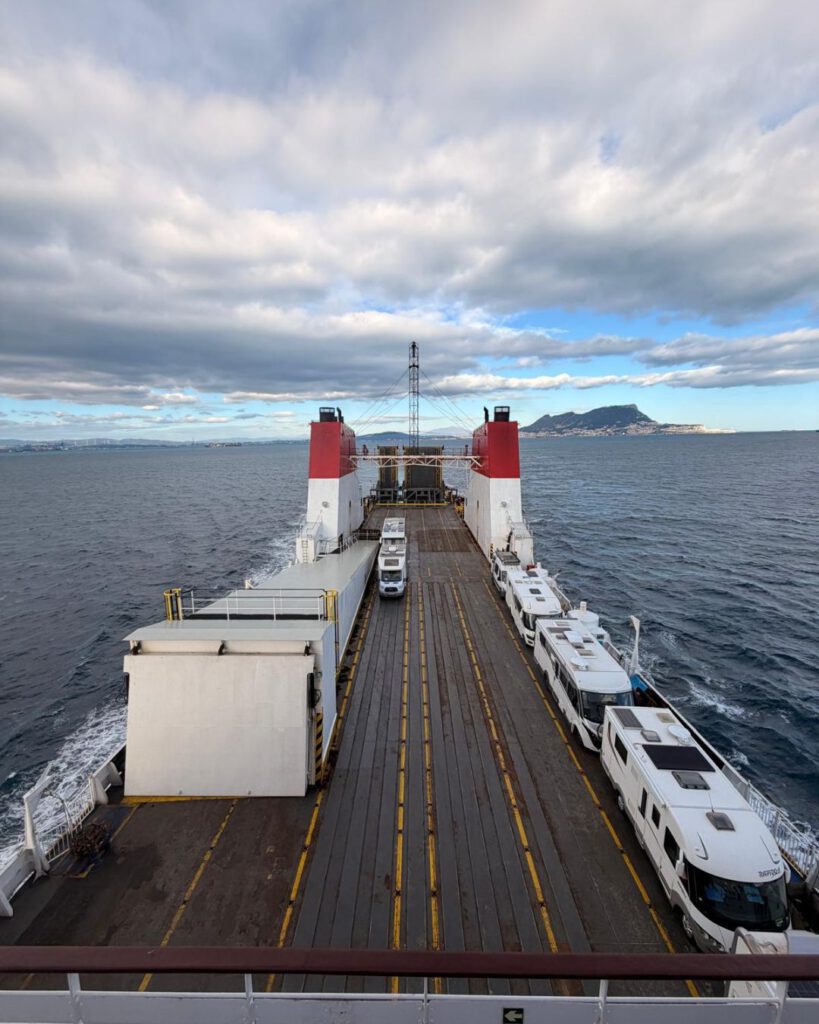
This is actually one of my favourite parts. There is something genuinely surreal about standing on the deck and watching Spain disappear behind you while Africa slowly comes into focus ahead. The Strait of Gibraltar is narrow. Just 14 kilometres at its shortest point, but it feels significant.
Shortly after departure, there is an announcement over the intercom telling you to go to the Moroccan immigration window on board. Before you join that queue, go to the information desk first and pick up a paper landing card. Fill it in carefully. I cannot stress this enough. If you make a mistake or cross anything out, they will make you fill in a new one. The staff are helpful if you are unsure about any of the questions, but take your time and get it right the first time. Once you are done, join the queue, hand over your card and passport, and a Moroccan officer will stamp you in while you are still at sea.
Arriving at Tangier Med
When the ferry docks, you head back down to your car and disembark. Right at the bottom of the ramp, there is a Moroccan official who checks your passport stamp before you go any further. After that, you follow signs to the customs area — douane in French — which is a few minutes drive from the disembarkation point.
This is where things get a little more bureaucratic, but honestly it was not as intimidating as I had expected. You pull up at the booths, wait for an official to come to you, and hand over your passport and vehicle registration document. They will likely want to search your car. How thoroughly they do this depends on the day, how busy it is, and the type of vehicle you are driving. Mine was fairly quick. They opened the car, had a look, asked if I had a drone, and that was essentially it.
Your documents disappear into a booth for a while. This is the bit where you just wait. When they come back, along with your passport and registration you will be given a small slip of paper. Hold onto this. It is your vehicle’s temporary admission document, and it proves your car is legally in Morocco. You will need it at the exit gate, you may be asked for it at police checkpoints on the road, and you need to hand it back when you leave the country. Your car is registered against your passport under this document, which means the vehicle must leave Morocco with you. In theory, you are not allow to fly home and leave the car behind, but I end up finding out that is was not so hard.
Insider Tip: If you plan to leave your car for some weeks in Morocco, you can. The car has to be parked somewhere (They don’t care where) and you need to sign a paper at Douane that makes you responsible for any import taxes at the vehicle. You need to do this at the airport. It takes 10 minutes and is super easy.
You are allowed up to six months in Morocco per calendar year under this temporary admission. Overstay that and you face a fine of up to 20,000 dirhams.
Drive to the exit gate of the customs area, hand your slip to the officer there, they check the details against the car, and then you are through.
The Last Stop in the Port
Before you drive out onto the actual road, there is one more stop to make, and it is an important one. There is a booth near the exit of the port complex where you can sort three things at once.
The first is insurance. Most standard European policies do not cover Morocco, so if yours does not, you need to buy Moroccan third-party cover here. Policies come in 10, 30, or 90-day options. Payment is cash only (euros or dirhams). You won’t need cash beforehand. There is an ATM there. Do not skip the insurance. It will get checked later and getting into an accident in Morocco without it is not a situation you want to find yourself in.
At the same area you can also buy a local SIM card and exchange cash for dirhams. I sorted all three at once and it took about ten minutes. Walking out of that booth with insurance sorted, a working local SIM, and Moroccan cash in my pocket felt like a proper fresh start.
The local SIM card was 20 EUR for 45 GB or 40 EUR for unlimited data. Some young girls will approach you to sell you the card and I found out the price is everywhere the same. Here was for sure the most convenient choice. Especially if you are going to rely on Google Maps later.
Crossing in a nutshell
Before you leave Spain
- Book your ferry ticket online in advance. The two main routes are Algeciras to Tangier Med (90 minutes) or Tarifa to Tangier Ville (60 minutes).
- Compare prices on Ferryhopper or Direct Ferries before booking. The same crossing can vary by up to 30% between companies.
- Make sure you have your passport, vehicle registration document, and driver’s license with you.
- Bring cash in euros. You will need it for insurance at the Moroccan port.
At the Spanish port
- Arrive at least 90 minutes before departure.
- If you booked online, go to the ferry company’s ticket office first to collect your physical boarding pass.
- Follow signs for check-in, show your boarding pass, and wait in the vehicle queue.
- When instructed, drive forward to Spanish passport control and get your passport stamped. Insurance won’t get checked
- Staff will direct you onto the ferry and tell you where to park your car.
On the ferry
- Go up to the passenger deck. You cannot stay with your car during the crossing.
- When an announcement is made, go to the information desk and pick up a paper landing card.
- Fill it in with no mistakes and no crossings out.
- Go to the Moroccan immigration window, hand over your landing card and passport, and get your passport stamped on board.
Arriving at the Moroccan port
- Return to your car and drive off the ferry.
- A Moroccan official at the bottom of the ramp will check your passport stamp.
- Follow signs to the customs area (douane).
- Hand your passport and vehicle registration to the customs officer.
- Your car will be searched. This is normal and usually quick.
- Wait while your documents are processed.
- You will receive a small slip of paper with your vehicle details. Keep this safe for your entire trip. You will need it to exit Morocco.
- Carnet d Passage is not necessary.
At the exit gate
- Hand your slip to the officer at the exit gate.
- They check your details match the car and wave you through.
Last stop before the road
- Stop at the booth near the port exit.
- Buy Moroccan car insurance here if you don’t already have it. Cash only, in euros or dirhams.
- You can also buy a local SIM card and get cash from an ATM
- Once done, there is a final quick check and you are free to drive into Morocco.
What I Had in the Car
I had done some reading on this before I left and I will pass on what I learned. Personal belongings and food are all completely fine. In theory, each adult is allowed 200 cigarettes, a litre of spirits, and a litre of wine, but if you take a bit more alcohol, nobody would say anything. Medicines are permitted for personal use but bring your prescription.
On the money side, you can bring as much foreign currency as you want, but anything equivalent to 15,000 MAD or above needs to be declared.
The things that will cause you serious problems: drones are completely banned and will be confiscated at the port scanner without exception. I asked the customs officer about this and he was very clear. There are no exceptions, not even for small ones. Also prohibited are narcotics, weapons, pornography, used tyres, and anything that looks like it is intended for resale, but that is kinda obvious. Your car is registered as a personal tourism vehicle, not a delivery vehicle. If you show up with quantities of goods that suggest you are planning to sell something, customs will notice.
Once You Are Through
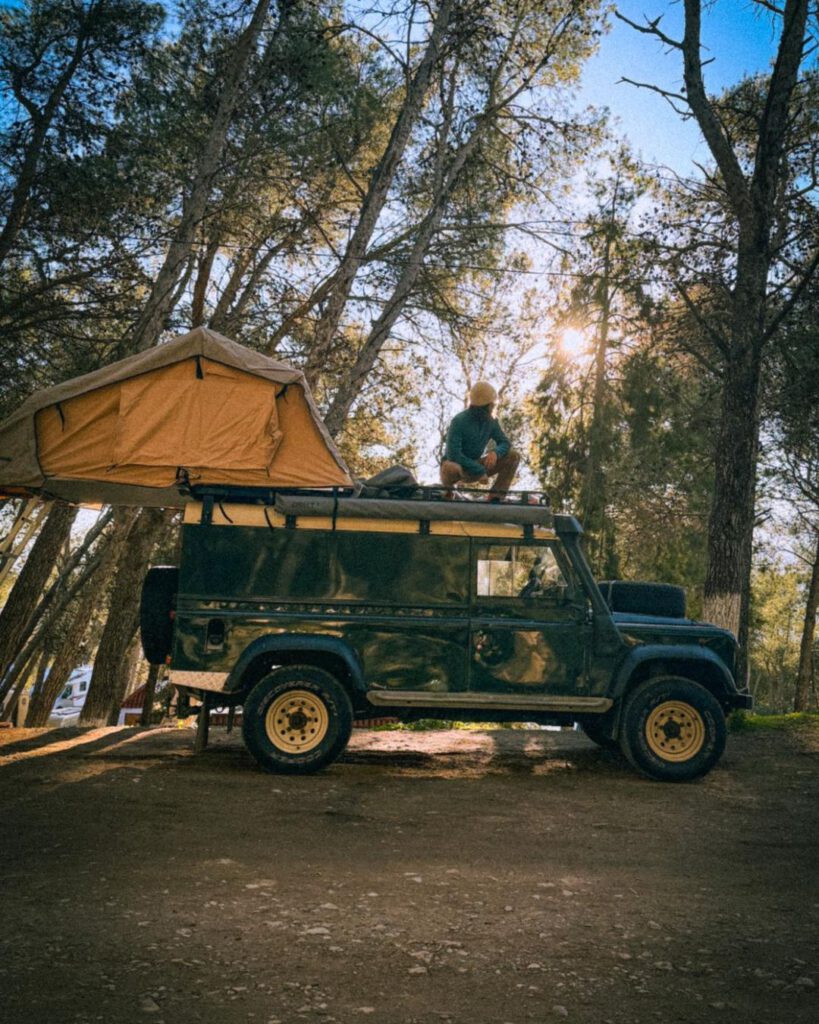
A big road is right there as you exit the port complex, and it connects quickly to the motorway heading south. Grab some dirham coins before you hit the motorway. Most toll booths are cash only. Don’t worry. The road is in very good condition and you won’t have any struggle to drive. The chaos is not there yet.
And then Morocco begins. Properly, completely begins. The light is different, the road signs switch to Arabic and French, and somewhere in the distance the Rif Mountains are already waiting for you.
It took me in total between 4 or 5 hours from the moment I drove onto the ferry in Algeciras to the moment I was on an open Moroccan road with nothing ahead of me but time. For what that feeling is worth, every minute of the paperwork was absolutely worth it.